Invisalign vs. Traditional Orthodontics: Choosing the Right Smile Correction
Discover the differences between Invisalign and traditional orthodontics, including treatment comfort, appearance, timelines, and who benefits most from each option.
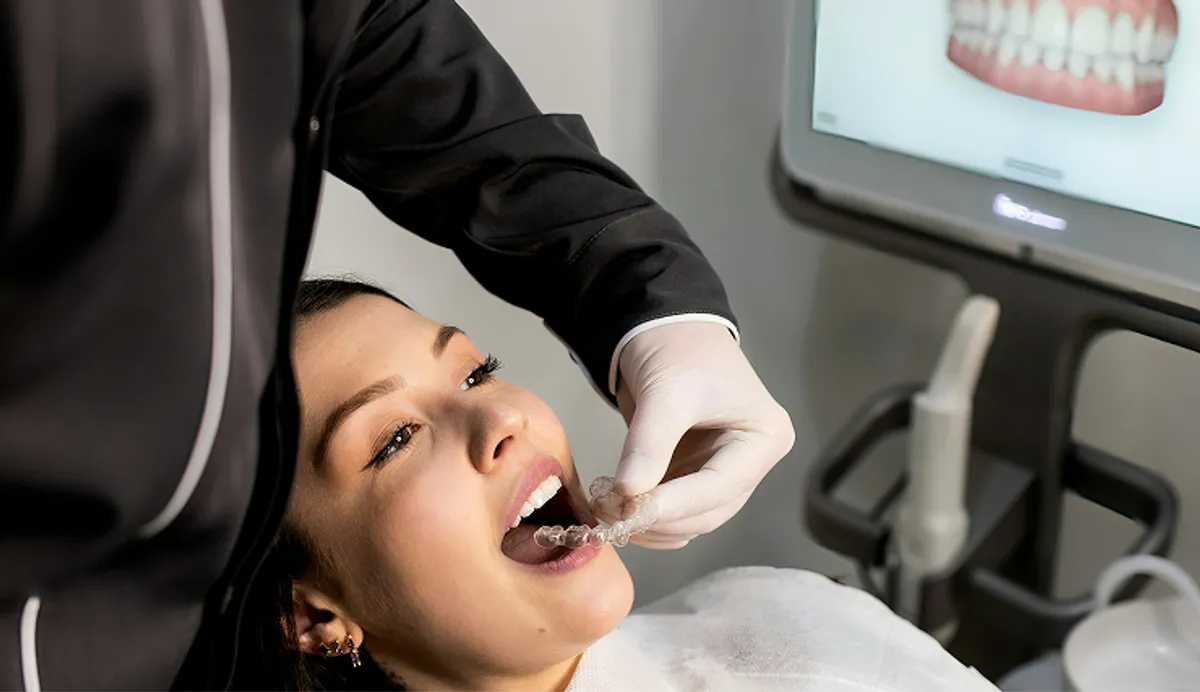
A straighter smile improves more than appearance. Proper alignment also improves bite function, cleaning access, gum health, and long-term tooth wear. At Crown Dental Group, both Invisalign and traditional Orthodontics help patients achieve healthier alignment — and the best option depends on your specific needs.
Invisalign: Nearly Invisible Treatment
Invisalign uses a series of clear, custom-designed aligners to move teeth gradually into their ideal position. Each set of trays is worn for approximately two weeks before moving to the next in the sequence.
Benefits of Invisalign
- Removable — aligners can be taken out for meals and brushing
- Nearly invisible — minimal impact on your appearance
- Comfortable — smooth plastic with no brackets or wires
- Easier hygiene — no obstacles when brushing and flossing
For adults and teens who want to improve their smile without interrupting their professional or social life, Invisalign is often the preferred choice.
Traditional Orthodontics Still Have Advantages
Some complex tooth movements respond better to fixed Orthodontics. Severe rotations, significant bite corrections, and certain jaw alignment issues may require the precision that only traditional brackets and wires can provide. Modern low-profile brackets are more comfortable and efficient than earlier designs.
Who Qualifies for Invisalign?
Invisalign is ideal for addressing:
- Mild to moderate crowding
- Spacing and gaps between teeth
- Overbites, underbites, and crossbites
- Minor bite corrections
A full Oral Exam and Digital Radiography are required to determine whether Invisalign or traditional braces best fit your alignment goals.
Digital Impressions Improve Precision
Digital Impressions eliminate traditional mold trays entirely. A handheld scanner captures a precise 3D model of your teeth, which is used to design your custom aligners and map out each stage of tooth movement before treatment begins.
CBCT for Deeper Planning
For complex cases, CBCT imaging provides a three-dimensional view of root positioning, bone density, and nerve pathways — critical information for planning safe, effective orthodontic movement.
Orthodontics Protect Teeth Long-Term
Straight teeth reduce uneven wear, lower the risk of fractures, and make it easier to maintain gum health. Patients who invest in alignment today often avoid more complex restorative needs in the future.
Veneers vs. Orthodontics
Some patients wonder whether Veneers can replace alignment treatment. In many cases, orthodontics should come first. Straightening teeth before placing veneers allows for a more conservative cosmetic approach that preserves more natural tooth structure.
Caring for Your Smile, One Visit at a Time
The best orthodontic plan balances aesthetics and health.
Start Your Smile Consultation Today
A straighter smile begins with the right plan.
Find us here