Ceramic Crowns Explained: The High-Tech Solution for Damaged Teeth in National City, CA
Learn how ceramic dental crowns in National City, CA restore damaged teeth using advanced cosmetic and restorative dentistry technology.
Why Damaged Teeth Should Never Be Ignored
A cracked, heavily filled, or weakened tooth may seem manageable at first. Many patients delay treatment because the tooth does not hurt consistently or because they think cosmetic concerns can wait. However, damaged teeth rarely heal on their own. Over time, structural weakness worsens, bacteria enter deeper layers of the tooth, and fractures can expand beneath the gumline.
At Crown Dental Group in National City, ceramic crowns are one of the most effective ways to restore both the appearance and function of compromised teeth. Modern all-ceramic crowns combine durability, aesthetics, and biocompatibility to protect teeth while maintaining a natural smile.
Patients from nearby communities like Chula Vista, Bonita, Imperial Beach, and Coronado trust our office for advanced restorative and cosmetic dentistry solutions.
What Is a Ceramic Crown?
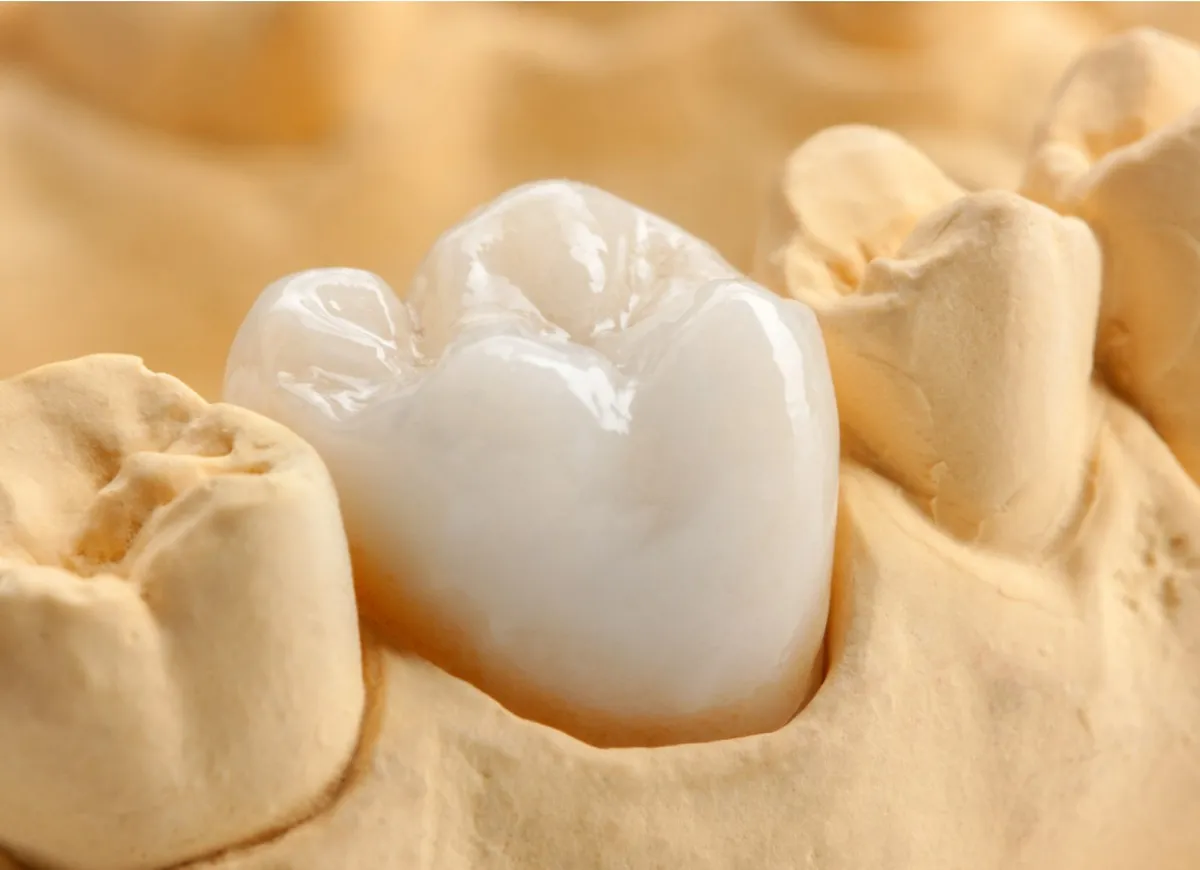
A dental crown is a custom-made restoration that completely covers the visible portion of a tooth. Think of it as a protective shell engineered specifically for your tooth’s dimensions, bite forces, and appearance.
Ceramic crowns are commonly recommended for:
- Severely decayed teeth
- Cracked or fractured teeth
- Teeth weakened after root canal therapy
- Large failing fillings
- Worn-down teeth from grinding
- Cosmetic smile improvements
Unlike older metal-based restorations, ceramic crowns are designed to mimic natural enamel in both appearance and texture.
The Biological Science Behind Tooth Fractures
Teeth are incredibly strong, but they are not indestructible.
Every day, teeth endure repetitive stress from:
- Chewing
- Clenching
- Grinding
- Temperature changes
- Acid exposure
- Trauma
Over time, microscopic cracks can form within enamel. Once enamel integrity is compromised, the tooth becomes more vulnerable to structural failure.
When a tooth is heavily filled, there is often less natural tooth structure remaining to absorb biting forces. This increases the likelihood of fractures.
A ceramic crown redistributes these forces across the entire tooth surface, helping prevent catastrophic cracking.
Why Ceramic Crowns Are Superior to Older Metal Crowns
Traditional crowns often used metal substructures beneath porcelain. While durable, these restorations had limitations:
- Dark edges near gums
- Opaque appearance
- Less natural translucency
- Potential gum irritation
Modern ceramic crowns eliminate these concerns.
The Optical Science of Ceramic Materials
Natural enamel interacts with light in a highly specific way. Light penetrates enamel slightly before reflecting outward.
Advanced ceramics replicate this behavior by providing:
- Natural translucency
- Light diffusion
- Surface gloss
- Color depth
This creates restorations that appear lifelike under various lighting conditions.
Zirconia vs Lithium Disilicate
At Crown Dental Group, we carefully select ceramic materials based on clinical needs.
Zirconia Crowns
Zirconia is an extremely strong ceramic commonly used for:
- Back teeth
- Heavy bite pressure
- Patients who grind their teeth
Its exceptional durability makes it ideal for high-stress areas.
Lithium Disilicate Crowns
Lithium disilicate offers superior translucency and aesthetics, making it excellent for:
- Front teeth
- Cosmetic restorations
- Smile makeovers
These materials allow us to balance strength and beauty for every patient.
The Patient Journey for Ceramic Crowns
Step 1: Comprehensive Examination
Your visit begins with:
- Digital X-rays
- Oral examination
- Bite analysis
- CBCT imaging when necessary
Our office near Westfield Plaza Bonita uses advanced imaging to evaluate:
- Tooth roots
- Bone support
- Existing restorations
- Fracture patterns
Step 2: Tooth Preparation
The damaged portions of the tooth are carefully removed while preserving as much healthy structure as possible.
Modern dentistry prioritizes conservative preparation whenever feasible.
Step 3: Digital Impressions
Gone are the days of uncomfortable impression trays.
Digital scanning technology creates highly accurate 3D models of your teeth. This improves:
- Crown fit
- Bite accuracy
- Comfort
- Turnaround time
Step 4: Temporary Crown Placement
A temporary crown protects the tooth while the final ceramic restoration is fabricated.
This allows patients to continue eating and smiling comfortably during the process.
Step 5: Final Crown Placement
Once the custom ceramic crown is ready:
- Fit is evaluated
- Bite is adjusted
- Color is confirmed
- The crown is bonded securely
Patients are often surprised by how natural their crown feels immediately after placement.
The Emotional Impact of Restoring a Tooth
Many people underestimate how stressful damaged teeth can become.
Patients frequently experience:
- Anxiety about breaking the tooth further
- Fear while chewing
- Embarrassment from visible damage
- Sensitivity to temperature
- Chronic discomfort
Restoring a compromised tooth often brings immediate relief emotionally and physically.
Patients commonly report:
- Greater confidence eating
- Improved appearance
- Reduced anxiety
- Better oral comfort overall
How Technology Improves Outcomes
At Crown Dental Group, technology plays a major role in treatment precision.
CBCT Imaging
CBCT scans provide detailed 3D views of:
- Bone structures
- Tooth roots
- Sinuses
- Nerves
This improves diagnostic accuracy significantly.
Digital Radiography
Digital X-rays reduce radiation exposure while producing highly detailed images instantly.
Digital Impressions
Digital scans eliminate distortion associated with traditional impressions and improve restoration accuracy.
How Long Do Ceramic Crowns Last?
With proper care, ceramic crowns often last 10–15 years or longer.
Longevity depends on:
- Oral hygiene
- Bite habits
- Grinding
- Regular dental care
Patients who grind their teeth may benefit from custom night guards to protect restorations.
Frequently Asked Questions
Are ceramic crowns strong?
Yes. Modern ceramic materials are highly durable and capable of handling significant chewing forces.
Will my crown look natural?
Absolutely. Ceramic crowns are designed to mimic natural enamel translucency and color.
Does getting a crown hurt?
The procedure is performed with local anesthesia and is typically very comfortable.
Can crowns stain?
Ceramic crowns are highly stain-resistant compared to natural teeth.
How long does treatment take?
Most crown procedures require two visits, though timelines vary depending on complexity.
Can a crown fall off?
While uncommon, crowns can loosen over time if cement weakens or decay develops underneath.
What happens if I grind my teeth?
Night guards can protect crowns from excessive pressure and prolong their lifespan.
Is a crown better than a filling?
When too much tooth structure is compromised, crowns provide significantly greater protection.
Restore Your Smile with Advanced Ceramic Crowns
If you have a cracked, damaged, or heavily restored tooth, don’t wait for the problem to worsen.
The team at Crown Dental Group proudly serves patients throughout National City and neighboring communities with advanced restorative dentistry solutions.
Call (619) 474-6200 or email info@crowndentalnc.com today.
Visit us at:
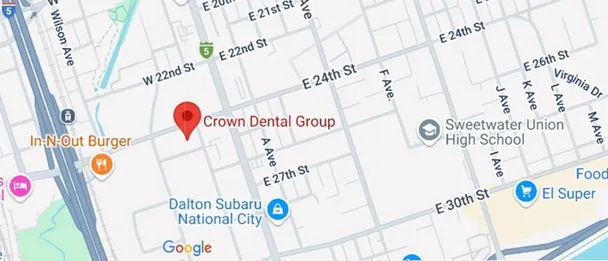
2405 Transportation Ave National City, CA 91950
Find us here