Why Does My Jaw Hurt? Common Causes of Jaw Pain and When to See a Dentist
Discover common causes of jaw pain, from teeth grinding and TMJ disorders to dental problems, and learn when jaw discomfort requires professional care.

Jaw pain can make ordinary activities surprisingly difficult. Eating, talking, yawning, or even opening your mouth can become uncomfortable when something is affecting the muscles, joints, or teeth involved in jaw movement.
Because jaw pain has many possible causes, it is important not to assume that every case is a problem with the jaw joint itself. Dental infections, teeth grinding, muscle tension, injuries, and temporomandibular joint disorders can all produce similar symptoms. Understanding the possible causes of jaw pain can help you recognize when it is something that can be monitored and when a dental evaluation is appropriate.
How Does the Jaw Work?
Your lower jaw, or mandible, is connected to your skull by two joints called the temporomandibular joints, commonly abbreviated as TMJ.
These joints are located on either side of your face, just in front of your ears. They allow your jaw to move in several directions so you can chew, speak, yawn, and open and close your mouth. Jaw movement also involves a network of muscles, ligaments, nerves, and teeth.
Because so many structures work together, discomfort in one area can sometimes be felt somewhere else. For example, a problem involving a tooth may produce pain that seems to originate in the jaw.
What Causes Jaw Pain?
There are several potential causes of jaw discomfort. Identifying the underlying source is important because treatment depends on what is actually causing the symptoms.
1. Teeth Grinding and Clenching
One of the common contributors to jaw discomfort is bruxism, which refers to grinding or clenching the teeth. This can happen during the day or while you are asleep. Some people are unaware they are grinding until a dentist identifies signs of excessive tooth wear. Repeated clenching can place significant stress on the muscles surrounding the jaw and the temporomandibular joints.
You may notice:
- Jaw soreness when waking up
- Facial muscle fatigue
- Headaches
- Tooth sensitivity
- Worn or flattened teeth
- Increased discomfort when chewing
If your dentist identifies signs of grinding, they may recommend strategies to reduce the forces placed on your teeth and jaw.
2. Temporomandibular Joint Disorders
Temporomandibular disorders, or TMD, describe conditions affecting the temporomandibular joints and the muscles responsible for jaw movement.
Symptoms can include:
- Pain near the jaw joint
- Clicking or popping sounds
- Difficulty opening the mouth
- Jaw stiffness
- Pain while chewing
- Facial discomfort
- Headaches
- A sensation that the jaw is locking
A clicking or popping sound does not automatically mean that treatment is necessary. Some people experience joint sounds without pain or functional limitations.
However, persistent pain, restricted movement, or locking deserves professional evaluation.
3. Dental Infection
A dental infection can cause pain that radiates into the jaw.
An infection may develop when bacteria enter the deeper portions of a tooth, often as a result of advanced decay, trauma, or other damage.
Possible symptoms include:
- Severe toothache
- Jaw pain
- Sensitivity to temperature
- Swelling
- Tender gums
- Pain when biting
- Fever or feeling unwell
A dental infection should not be ignored. Infections can progress and may require prompt treatment.
If jaw pain occurs together with facial swelling, difficulty swallowing, difficulty breathing, or significant illness, seek urgent medical or dental care.
4. Tooth Decay
Not all tooth decay causes obvious toothaches. As decay progresses deeper into the tooth, however, it can cause pain or sensitivity that may be perceived around the jaw. A cavity can sometimes make it difficult to determine exactly which tooth is responsible, particularly when pain is referred to nearby structures. A dental examination can help identify whether decay is contributing to your symptoms.
5. Impacted or Problematic Wisdom Teeth
Wisdom teeth can sometimes contribute to pain in the back of the jaw, particularly when they do not have enough room to erupt properly. An impacted wisdom tooth may remain partially or completely beneath the gum or bone.
Problems can include:
- Pain at the back of the mouth
- Swollen gums
- Difficulty opening the mouth
- Food becoming trapped around the tooth
- Recurrent inflammation
- Infection
Dental imaging can help determine the position of wisdom teeth and whether they are contributing to symptoms.
6. Jaw Injury
An accident, sports injury, fall, or blow to the face can affect the jaw. Depending on the injury, damage may involve the teeth, muscles, joints, or jawbone. Seek professional evaluation if jaw pain follows an injury, particularly if you experience swelling, significant difficulty opening your mouth, changes in your bite, numbness, or difficulty chewing. Some injuries require immediate treatment.
7. Muscle Tension
The muscles used for chewing can become tense or fatigued, particularly when they are repeatedly overworked. Clenching, prolonged chewing, stress-related muscle tension, and certain habits can contribute to soreness. The discomfort may be felt around the cheeks, temples, jawline, or near the ears. If muscle-related jaw pain persists, your dentist can help determine whether there is an underlying dental or TMJ-related issue.
8. Changes in Your Bite
Your upper and lower teeth are designed to work together during chewing. Changes in the way your teeth contact each other can sometimes contribute to discomfort in the teeth, jaw muscles, or joints. Potential factors include dental restorations, tooth movement, missing teeth, or orthodontic changes. If your bite suddenly feels different and is accompanied by pain, discuss the change with your dentist.
What Does Jaw Pain Have to Do With Your Teeth?
The relationship between your teeth and jaw is highly interconnected. Every time you chew, your teeth come into contact while muscles generate force and the temporomandibular joints coordinate movement. If one part of this system is affected, other structures may experience additional stress. For example, a damaged tooth may cause you to chew differently to avoid discomfort. Similarly, clenching may place excessive forces on both teeth and jaw muscles.
This is why a dental examination can be useful even when the discomfort seems to be located primarily in the jaw.
How Does a Dentist Diagnose Jaw Pain?
A jaw-pain evaluation typically begins with a discussion of your symptoms.
Your dentist may ask:
- Where does the pain occur?
- When did it begin?
- Is it constant or intermittent?
- Does chewing make it worse?
- Do you grind or clench your teeth?
- Have you experienced an injury?
- Does your jaw click or pop?
- Do you have tooth sensitivity?
- Have you noticed swelling or changes in your bite?
Your dentist will then examine your teeth, gums, jaw movement, and facial muscles.
Depending on your symptoms, dental X-rays or other imaging may be recommended. CBCT imaging can provide three-dimensional information about dental and jaw structures when clinically appropriate. The purpose of the evaluation is to distinguish between dental, muscular, joint-related, and other possible causes of pain.
How Is Jaw Pain Treated?
There is no single treatment for jaw pain because the appropriate approach depends on the cause.
Treatment may include:
Managing Teeth Grinding
If bruxism is contributing to your symptoms, your dentist may recommend a custom night guard to help protect the teeth from excessive grinding forces during sleep. Other strategies may also be recommended depending on the underlying factors.
Treating Dental Problems
If a cavity, damaged tooth, or infection is responsible for the pain, dental treatment is directed at the affected tooth. Depending on the condition, treatment may include a filling, crown, root canal treatment, extraction, or another appropriate procedure.
Addressing TMJ-Related Problems
For certain TMD conditions, treatment may initially focus on conservative measures and reducing excessive stress on the jaw. Your dentist can determine an appropriate approach based on the specific joint or muscle symptoms involved.
Treating Wisdom Teeth
If an impacted or problematic wisdom tooth is causing pain or recurrent infection, your dentist can evaluate whether removal or another treatment is appropriate.
Can Jaw Pain Be Prevented?
Not every cause of jaw pain can be prevented, but several habits can help reduce unnecessary stress on your jaw.
Consider:
- Avoid chewing on pens, ice, or other hard objects.
- Do not use your teeth to open packages.
- Avoid excessive gum chewing if it aggravates your jaw.
- Pay attention to daytime clenching.
- Maintain regular dental examinations.
- Wear a recommended night guard if you grind your teeth.
- Address dental pain rather than changing your chewing pattern indefinitely.
- Seek evaluation after significant jaw injuries.
Maintaining your dental health is also important because untreated tooth problems can sometimes contribute to jaw discomfort.
When Is Jaw Pain a Dental Emergency?
Some jaw symptoms require prompt attention.
Seek urgent dental or medical care if you experience jaw pain accompanied by:
- Significant facial swelling
- Difficulty breathing or swallowing
- High fever
- Rapidly worsening pain
- Severe dental pain
- A traumatic injury
- Inability to open or close your mouth normally
- Significant changes in your bite after an injury
These symptoms can indicate an infection, injury, or other condition requiring timely evaluation.
Jaw Pain Evaluation in National City, CA
If you are experiencing persistent jaw discomfort, Crown Dental Group provides comprehensive dental care for patients in National City and surrounding South Bay communities. Our dental services include oral examinations, night guards, periodontal treatment, restorative dentistry, emergency treatment, extractions, root canals, and other general dental services that may be relevant when evaluating the source of oral and jaw-related symptoms. Our practice also uses modern dental technology, including digital radiography and CBCT imaging when clinically appropriate, to support diagnosis and treatment planning.
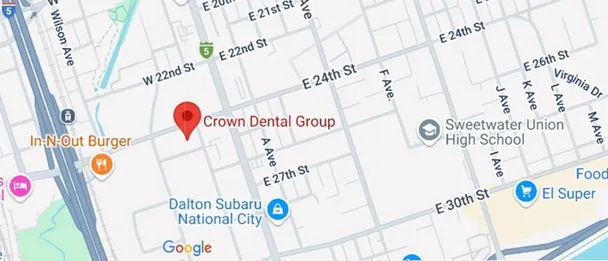
Crown Dental Group serves patients throughout National City, Chula Vista, Bonita, Imperial Beach, and nearby South Bay San Diego communities. Our office is located at 2405 Transportation Ave, National City, CA 91950, conveniently serving patients near the National City Mile of Cars and surrounding areas.
Jaw pain should not automatically be dismissed as stress or something you simply have to live with. If the discomfort persists, a professional examination can help identify the underlying cause and determine the appropriate next step.
- Crown Dental Group
- 2405 Transportation Ave
- National City, CA 91950
- Phone: (619) 474-6200
- Email: info@crowndentalnc.com
Frequently Asked Questions About Jaw Pain
1. Why does my jaw hurt when I chew?
Pain while chewing can have several causes, including teeth grinding, TMJ disorders, dental infections, cavities, damaged teeth, or muscle strain. A dental examination can help identify the source.
2. Can teeth grinding cause jaw pain?
Yes. Repeated grinding and clenching can place stress on the muscles and joints involved in jaw movement and may contribute to soreness, headaches, and tooth wear.
3. What does TMJ pain feel like?
TMJ-related discomfort can include pain near the jaw joint, stiffness, pain while chewing, clicking or popping, difficulty opening the mouth, or sensations of locking.
4. Can a cavity cause jaw pain?
Yes. Deeper tooth decay can cause significant dental pain that may radiate into the surrounding jaw or face.
5. Should I be worried if my jaw clicks?
Jaw clicking or popping is not necessarily a problem when it occurs without pain or restricted movement. However, clicking accompanied by pain, locking, or difficulty opening the mouth should be evaluated.
6. Can a night guard help with jaw pain?
A properly fitted night guard may help protect teeth from excessive grinding forces in patients with bruxism. Your dentist can determine whether a night guard is appropriate for you.
7. When should I see a dentist for jaw pain?
Schedule an evaluation if jaw pain is persistent, recurring, worsening, affects chewing or opening your mouth, or occurs alongside tooth pain, swelling, or other dental symptoms.
8. Is severe jaw pain a dental emergency?
It can be, particularly when accompanied by facial swelling, fever, difficulty swallowing or breathing, severe dental pain, significant trauma, or rapidly worsening symptoms. These situations require prompt professional attention.
Find us here