Why Does Food Keep Getting Stuck Between My Teeth? Causes and Solutions
Learn why food gets stuck between your teeth, from tooth spacing and cavities to restorations and bite changes, and when to see a dentist.
Almost everyone has had food become stuck between their teeth occasionally. A piece of popcorn, meat, vegetables, or another food can find its way into a small space and require flossing to remove.
But what if the same spot traps food almost every day?
Persistent food impaction is not something you necessarily have to accept as normal. When food repeatedly becomes lodged between the same teeth, there may be a specific reason for the space, contact, or shape of those teeth.
The cause can range from natural tooth anatomy to changes caused by tooth decay, missing teeth, gum changes, worn restorations, or shifting teeth. Identifying the underlying cause can make it easier to prevent the problem and protect your oral health.
Why Does Food Get Stuck Between Teeth?
Teeth are normally positioned so that their neighboring surfaces make contact. These contact points help prevent food from being forced deeply between the teeth during chewing.
When that contact is loose, altered, or absent, food can become trapped more easily.
Common causes include:
- Natural spacing between teeth
- Changes in tooth position
- Tooth decay
- Worn or damaged dental fillings
- Poorly fitting restorations
- Missing teeth
- Changes in the supporting tissues around teeth
- Tooth shape and anatomy
- Bite-related forces
The location and frequency of the food trapping can provide useful clues about what is happening.
Your Tooth Shape Can Affect Food Trapping
Not every case of food impaction means something is wrong.
Teeth have different shapes, contours, and contact patterns. Some people naturally have slightly wider spaces between particular teeth, while certain tooth shapes can create areas where food is more likely to become lodged.
For example, a space between two back teeth may allow fibrous foods to become trapped during chewing.
If the area has always behaved this way and there are no other symptoms, your dentist may simply recommend a specific cleaning technique.
However, if the food trapping is new or has become significantly worse, another dental change may be responsible.
A Change in Tooth Contact Can Create a New Problem
Healthy teeth normally contact neighboring teeth at specific points. These contacts help stabilize the teeth and reduce the amount of food pushed between them.
If the relationship between two teeth changes, food may begin getting caught in the space.
This can happen after:
- Tooth movement
- Tooth wear
- Tooth loss
- Dental treatment
- Changes in the shape of a restoration
- Changes in the surrounding supporting tissues
A patient may notice that a particular area suddenly requires flossing after every meal when it previously did not.
That change is worth mentioning to your dentist.
Cavities Can Create Spaces Where Food Collects
Tooth decay can change the shape and structure of a tooth.
When decay affects the area between two teeth, it may create a rough or irregular surface that allows food to become lodged more easily. In some cases, food trapping may occur before a person experiences significant pain.
Other possible signs include:
- Increased sensitivity
- A rough area between teeth
- Pain when chewing
- Sensitivity to cold or sweets
- A visible darkened area
- Floss repeatedly catching or shredding in one location
Not every cavity causes noticeable symptoms, which is one reason routine dental examinations remain important.
Old Fillings Can Affect How Food Moves Between Teeth
Dental fillings restore teeth affected by decay or damage. When a filling is placed between two teeth, the restoration should ideally recreate an appropriate contact with the neighboring tooth.
If the contact is too open, food can repeatedly become trapped in that area.
A patient may notice the problem immediately after treatment or only after some time has passed.
Food trapping around a restoration can also occur if the filling becomes worn, damaged, or fractured. Your dentist can examine the restoration and determine whether it needs adjustment, repair, or replacement.
Crowns and Other Restorations Can Change Food Trapping
Crowns, bridges, and other restorations are designed to restore tooth shape and function. The contours and contacts of these restorations can affect how food moves during chewing.
If food consistently gets caught around a crown or bridge, the restoration should be examined.
This does not automatically mean the restoration is defective. The surrounding tooth position, bite, gum tissues, and restoration itself all need to be considered.
A dental examination can determine whether the issue is related to the restoration or another factor.
Missing Teeth Can Create Larger Spaces
When a tooth is missing, the surrounding teeth no longer have the same neighboring contact.
This can create areas where food collects during chewing. Adjacent teeth may also gradually change position, potentially altering the shape of the space.
Food accumulation around a missing tooth is one reason tooth replacement may be recommended when appropriate.
Depending on the patient’s needs, replacement options can include dental implants, bridges, or dentures.
Gum Changes Can Alter the Space Between Teeth
The tissues surrounding the teeth can change over time. When the shape of the gumline or supporting structures changes, spaces between teeth may become more accessible to food.
Food may then become lodged closer to the gumline rather than simply between the crowns of the teeth.
This can make cleaning more difficult and may cause localized irritation.
If you notice a new area where food consistently gets trapped close to the gums, a dental examination can help determine whether changes in the surrounding tissues are contributing to the problem.
Why Does Food Get Stuck in the Same Spot?
The fact that food repeatedly becomes trapped in the same location is an important detail.
If you have to floss one specific area after nearly every meal, there may be a persistent structural reason.
For example, the teeth may have:
- An open contact
- An irregular surface
- A cavity
- A damaged restoration
- A change in position
- A space created by tooth loss
- A particular anatomical shape that encourages food impaction
Your dentist can examine the contact between the teeth and determine whether the problem can be corrected.
Is Food Trapping Harmful?
Occasional food trapping is generally not unusual.
The concern is repeated food impaction combined with inadequate cleaning. Food debris can contribute to plaque accumulation, particularly when it remains in an area that is difficult to clean.
Persistent irritation can also make the area uncomfortable.
If food repeatedly becomes stuck and you cannot effectively clean the area, addressing the underlying cause may be more useful than simply trying to remove the food over and over.
What Can You Do When Food Gets Stuck?
The safest approach is to remove the food gently without damaging the gums.
Use Dental Floss
Guide the floss carefully between the teeth and curve it around each tooth. Avoid snapping the floss forcefully into the gums.
Consider an Interdental Cleaner
Depending on the size of the space, your dentist may recommend an interdental brush or another cleaning device.
Rinse With Water
Rinsing can help dislodge loose food particles, particularly after meals.
Avoid Sharp Objects
Do not use pins, needles, knives, or other sharp objects to remove food. These can injure the gums or damage dental restorations.
Ask Your Dentist About the Specific Area
If the same space traps food repeatedly, professional evaluation is more useful than continually treating the symptom at home.
When Should You See a Dentist?
Make an appointment if:
- Food repeatedly gets stuck between the same teeth
- The problem recently started
- Floss consistently catches or shreds
- You have pain when chewing
- The area is sensitive to hot, cold, or sweets
- A filling or crown feels different
- Your gums become swollen or irritated around the area
- You notice a new space between teeth
- Food becomes trapped near a missing tooth
Your dentist can inspect the teeth, contact points, restorations, and surrounding tissues to identify the likely cause.
How Dentists Treat Persistent Food Impaction
Treatment depends entirely on what is causing the problem.
Possible approaches include:
Dental restoration: If decay or a damaged restoration has created an irregular surface, the tooth may need a filling, repair, or replacement.
Restorative adjustment: If the shape or contact of a restoration is contributing to food trapping, the dentist may determine whether an adjustment or replacement is appropriate.
Orthodontic treatment: If tooth position is contributing to the problem, orthodontic treatment may be considered in appropriate cases.
Tooth replacement: If a missing tooth has created a problematic space, an implant, bridge, or denture may be discussed.
Preventive care: If the space is simply part of your natural anatomy, your dentist can recommend the most effective method for keeping it clean.
The goal is not simply to remove food after it becomes trapped. The goal is to understand why it keeps happening.
Protect Your Oral Health at Crown Dental Group
Food getting stuck between your teeth occasionally is normal. However, if the same area traps food repeatedly, it may be worth having the area evaluated.
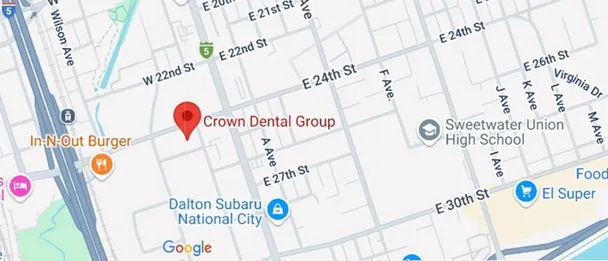
At Crown Dental Group in National City, our team can examine persistent food impaction and evaluate the teeth, restorations, contact points, and surrounding tissues. If an underlying issue is identified, we can discuss appropriate preventive, restorative, periodontal, or tooth replacement options.
We serve patients in National City and surrounding South Bay communities, including Chula Vista, Bonita, and Imperial Beach.
If you are constantly reaching for floss after every meal because food keeps getting trapped in the same place, schedule an examination to find out why.
- Crown Dental Group
- 2405 Transportation Ave
- National City, CA 91950
- Phone: (619) 474-6200
- Email: info@crowndentalnc.com
Frequently Asked Questions
1. Why does food keep getting stuck between the same two teeth?
Repeated food trapping can occur because of an open contact, tooth shape, tooth movement, decay, a damaged restoration, missing teeth, or changes in the surrounding tissues. A dentist can determine the specific cause.
2. Is it normal for food to get stuck between my teeth?
Occasional food trapping is common. If food consistently becomes lodged in the same location, particularly if the problem is new, it is worth having the area examined.
3. Can a cavity cause food to get stuck between teeth?
Yes. Decay can alter the shape and surface of a tooth, creating an area where food can become trapped. A cavity may exist even without significant pain.
4. Why does my floss keep getting stuck or shredding?
Floss catching or shredding repeatedly in one area can be associated with an irregular tooth surface, decay, or a dental restoration. Your dentist can inspect the area to identify the cause.
5. Can a filling cause food to get stuck?
Yes. If the contact between a filling and the neighboring tooth is too open or the restoration has changed over time, food may become trapped more frequently.
6. How can I remove food stuck between my teeth safely?
Dental floss, an appropriate interdental cleaner, or rinsing with water can help. Avoid using sharp objects because they can injure the gums or damage teeth and restorations.
7. Can missing teeth cause food to collect in certain areas?
Yes. Missing teeth can create spaces where food collects and may also allow neighboring teeth to change position over time.
8. When should I worry about food getting stuck between my teeth?
See your dentist if the problem is persistent, recently developed, painful, associated with sensitivity, causes gum irritation, or occurs around a filling, crown, bridge, or missing tooth.
Find us here