Why Do My Teeth Look Uneven? Understanding Tooth Shape, Size, and Symmetry
Wondering why your teeth look uneven? Learn about natural tooth shape, size differences, and cosmetic dental treatments available in National City, CA.

Have you ever looked in the mirror or seen a photo of your smile and noticed that some teeth look longer, shorter, wider, or differently shaped than others? Uneven-looking teeth are common, and they do not always indicate a dental problem. In many cases, differences in tooth shape and size are simply part of your natural smile.
However, noticeable differences can sometimes be related to tooth development, previous dental damage, or changes that affect how your teeth function. Understanding the possible causes can help you determine whether your concern is purely cosmetic or whether a dental evaluation may be beneficial.
At Crown Dental Group in National City, CA, patients can discuss concerns about tooth appearance and learn which treatment options may be appropriate for their individual needs.
What Does It Mean to Have Uneven Teeth?
Uneven teeth can refer to differences in the size, shape, length, or proportions of individual teeth. For example, one front tooth may appear slightly wider than the other, or a tooth may have a rounded edge while its neighbor has a more squared appearance.
These differences can be subtle or more noticeable depending on the position of the teeth, the shape of the surrounding gum tissue, and how the teeth appear when you smile.
It is important to distinguish uneven tooth shape from other dental concerns. Teeth that appear uneven because they overlap or sit at different angles may involve alignment issues. Teeth that look shorter over time may be affected by wear. A tooth that suddenly changes shape may require an examination to check for damage.
Identifying the reason behind the appearance is the first step toward choosing an appropriate solution.
7 Reasons Your Teeth May Look Uneven
1. Natural Differences in Tooth Shape and Size
Not everyone’s teeth develop with identical dimensions. One front tooth may naturally be a little wider, while another may have a more rounded edge. These differences can occur even when the teeth are healthy and properly aligned.
The proportions of the upper front teeth are especially noticeable because they are visible when you speak and smile. Small differences in width or length can affect how symmetrical your smile appears.
Natural variation is not necessarily a sign of poor oral health. If your teeth are comfortable, functional, and free from other concerning symptoms, the difference may simply be part of your anatomy.
2. Genetics and Tooth Development
Genetics influence several characteristics of your teeth, including their size, shape, and overall proportions. Your natural tooth development can therefore contribute to differences between neighboring teeth.
Some people have smaller-than-average teeth, while others have teeth that appear relatively large in relation to their jaw. In certain cases, a tooth may develop with an unusual shape or size.
Developmental differences can also affect the relationship between tooth size and the available space in the mouth. This may influence the overall appearance of the smile, although tooth size and tooth alignment are separate considerations.
A dentist can assess whether the differences are consistent with natural development or whether further evaluation is needed.
3. Differences in the Shape of the Front Teeth
The upper front teeth do not all have the same shape. The central incisors, lateral incisors, and canines each have distinct anatomical characteristics.
Central incisors are typically wider, while lateral incisors are generally smaller. Canines often have more pointed edges. These differences create the natural structure of the smile.
Sometimes, however, a lateral incisor may appear particularly small or narrow compared with the surrounding teeth. This can make the smile look uneven even when the teeth are healthy.
A dentist can determine whether the appearance is due to natural tooth anatomy or a developmental variation that may benefit from treatment.
4. Uneven or Irregular Tooth Edges
The edges of your teeth influence how uniform your smile looks. Some teeth naturally have flatter edges, while others have more rounded contours.
Newly erupted permanent front teeth may also have small natural ridges along their biting edges. These ridges, called mamelons, are a normal developmental feature and often become less noticeable with use over time.
If the edges of neighboring teeth differ significantly, the smile may appear irregular. However, it is important not to assume that every uneven edge needs to be corrected. A dentist should first determine whether the difference is natural, related to wear, or associated with damage.
5. Previous Dental Damage
A tooth may look shorter, narrower, or asymmetrical if a small portion of its structure has chipped or broken. The damage may have occurred after an accident, biting on a hard object, or another event that affected the tooth.
Minor changes can sometimes go unnoticed until you compare your smile with older photographs or notice a rough edge with your tongue.
If a tooth has recently changed shape, it is worth arranging a dental examination. A dentist can assess the affected area and determine whether treatment is needed to protect the tooth.
Avoid attempting to file or reshape a tooth at home. Removing enamel without professional assessment can permanently damage the tooth and may lead to sensitivity or other complications.
6. Differences in Gum Contours
The gums frame your teeth and influence how long or short they appear. Even when two teeth are similar in size, differences in the gumline can make one tooth look longer than its neighbor.
Gum contours naturally vary between individuals. In some cases, the gum tissue may cover different amounts of the teeth, affecting the overall symmetry of the smile.
Changes in gum position can also occur because of recession or other periodontal concerns. If the gumline has changed noticeably, particularly if you experience bleeding, tenderness, or exposed tooth roots, a dental evaluation can help identify the cause.
Treatment depends on whether the difference is a normal anatomical variation or a sign of an underlying concern.
7. Previous Dental Work
Fillings, crowns, veneers, and other dental restorations can affect the shape and proportions of teeth. A restoration that differs slightly from the neighboring teeth in contour, length, or width may make the smile appear less uniform.
This does not automatically mean the restoration is defective. Differences may reflect the original tooth structure, the purpose of the treatment, or changes that occurred after the restoration was placed.
If a crown or filling feels uncomfortable, interferes with your bite, or looks noticeably different from surrounding teeth, ask your dentist to evaluate it. Adjustments or replacement may be appropriate in some cases, depending on the restoration’s condition and function.
Are Uneven Teeth a Dental Problem?
Not always. The appearance of uneven teeth alone does not necessarily indicate a problem that requires treatment.
If the differences have been present for years and you have no pain, difficulty chewing, or other symptoms, they may simply reflect your natural tooth anatomy.
However, it is worth seeking a dental assessment if you notice:
- A tooth that suddenly looks shorter, chipped, or differently shaped.
- A restoration that feels loose, uncomfortable, or uneven when you bite.
- New sensitivity or pain affecting a particular tooth.
- Changes in the gumline around one or more teeth.
- Difficulty biting or chewing comfortably.
- A tooth that appears to be changing over time.
A dentist can examine the teeth, gums, and bite to determine whether the concern is cosmetic, functional, or related to an underlying dental condition.
How Can Dentists Correct Uneven-Looking Teeth?
Treatment depends on the cause, the amount of tooth structure involved, and your overall oral health. Not every difference requires correction, and the most conservative appropriate option is often worth considering first.
Dental Bonding
Dental bonding uses tooth-colored composite resin to adjust the shape or appearance of a tooth. It may be suitable for certain small gaps, minor chips, or teeth that appear slightly smaller than their neighbors.
The dentist applies and shapes the resin to create a more balanced appearance. Bonding can often be completed in a relatively short appointment, depending on the number of teeth being treated.
However, bonding is not suitable for every case. Composite resin can stain or chip over time, and the result depends on the tooth’s condition and the amount of reshaping required.
Porcelain Veneers
Veneers are thin coverings placed on the front surfaces of selected teeth. They may be considered when a patient wants to change tooth shape, size, color, or proportions.
Veneers can help create a more consistent appearance across the visible teeth. Before recommending them, a dentist should assess the health of the teeth and gums, the bite, and the patient’s expectations.
Some veneer treatments require removing a small amount of enamel, making the procedure irreversible. Veneers also require maintenance and may need replacement over time. They are not automatically the best option for every uneven smile.
Dental Crowns
A dental crown covers a tooth to restore its shape, strength, or function. Crowns may be appropriate when a tooth has significant structural damage, extensive decay, or an existing restoration that requires replacement.
Although crowns can improve appearance, they generally involve more tooth preparation than bonding and may be more extensive than necessary for a minor cosmetic difference.
A dentist will consider the condition of the tooth and whether a less invasive treatment could achieve the desired result.
Orthodontic Treatment
If teeth look uneven because they overlap, rotate, or sit at different angles, orthodontic treatment may be more appropriate than changing their shape.
Braces or clear aligners can gradually move teeth into improved positions. The right approach depends on the alignment of the teeth, the bite, and the complexity of the case.
Orthodontic treatment does not necessarily change the natural shape of the teeth, but improving their positions may make the overall smile appear more balanced.
Conservative Contouring
In selected cases, a dentist may recommend minor enamel contouring to smooth a small irregularity or refine the edge of a tooth.
This option is limited because enamel does not grow back after it is removed. Contouring is only appropriate when the amount of enamel involved is minimal and the tooth can remain healthy and functional.
Significant reshaping should never be attempted at home. A dental professional must determine whether contouring is safe and whether another treatment would be more appropriate.
How Dentists Evaluate Tooth Shape and Symmetry
Before recommending cosmetic treatment, a dentist should look beyond the appearance of individual teeth.
An evaluation may include:
- Tooth structure: Checking for chips, fractures, decay, or previous restorations.
- Tooth proportions: Comparing the size, length, and shape of neighboring teeth.
- Gum health: Assessing the gumline and checking for inflammation or recession.
- Bite and alignment: Determining whether the teeth meet comfortably and function properly.
- Treatment goals: Discussing which features concern you and what kind of change you hope to achieve.
Photographs, dental imaging, or digital impressions may be recommended when they provide useful information for diagnosis or treatment planning.
This assessment helps distinguish between a cosmetic preference and a concern that may require restorative or orthodontic care.
Can You Prevent Your Teeth From Looking Uneven?
Natural tooth shape and size are largely determined by development and genetics, so they cannot always be prevented or changed through daily oral hygiene.
However, protecting your teeth can help reduce the risk of damage that may alter their appearance over time.
To help maintain your smile:
- Brush twice daily with fluoride toothpaste.
- Clean between your teeth every day using floss or another suitable interdental cleaner.
- Avoid using your teeth to open packages or bite hard objects.
- Wear a properly fitted sports mouthguard during activities with a risk of dental injury.
- Visit your dentist regularly for examinations and preventive care.
- Ask about appropriate protection if you grind or clench your teeth.
If you notice a new change in tooth shape, schedule an examination rather than waiting for the problem to worsen.
Improve Your Smile With Guidance From Crown Dental Group
Uneven-looking teeth can result from natural differences in tooth anatomy, developmental variations, gum contours, or previous dental damage. The appropriate response depends on what is causing the appearance and whether it affects your oral health or comfort.
At Crown Dental Group, patients can discuss concerns about tooth shape, size, and smile symmetry and learn about available treatment options. Depending on your needs, treatment may involve cosmetic dentistry, restorative care, or orthodontic evaluation.
If you are in National City, Chula Vista, Bonita, Imperial Beach, or the surrounding South Bay San Diego communities, schedule a dental consultation to discuss your concerns.
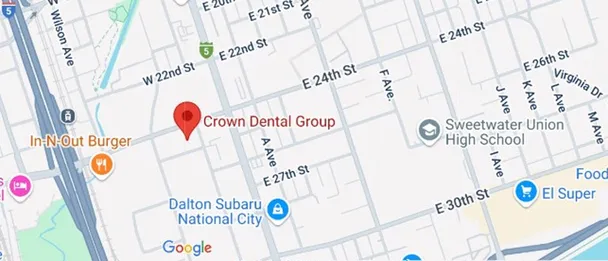
- Crown Dental Group
- 2405 Transportation Ave
- National City, CA 91950
- Phone: (619) 474-6200
- Email: info@crowndentalnc.com
Frequently Asked Questions
1. Is it normal for one front tooth to be bigger than the other?
Yes. Natural differences in tooth size and shape are common. A dentist can determine whether the difference is a normal variation or whether it is related to damage, a developmental condition, or another dental concern.
2. Can uneven teeth become even on their own?
Some natural features, such as small ridges on newly erupted permanent teeth, may become less noticeable over time. However, significant differences in tooth size or shape generally do not correct themselves. A dentist can explain whether monitoring or treatment is appropriate.
3. Can dental bonding make uneven teeth look more symmetrical?
Dental bonding can improve the appearance of certain minor differences in tooth shape or size. It is not suitable for every situation, and the dentist must consider the tooth’s condition, bite, and the amount of material needed.
4. Are veneers necessary for uneven teeth?
No. Veneers are only one possible treatment. Depending on the cause and severity of the difference, bonding, orthodontic treatment, minor contouring, or no treatment at all may be more appropriate.
5. Can uneven teeth affect my bite?
Differences in tooth shape do not always affect the bite. However, irregular tooth positions or certain structural changes can interfere with how the teeth meet. If you experience discomfort while chewing or feel that your bite has changed, arrange a dental evaluation.
6. Should I be concerned if one tooth suddenly looks shorter?
A tooth that suddenly appears shorter may have chipped, fractured, or experienced another structural change. It should be examined by a dentist, especially if you also have pain, sensitivity, or discomfort when biting.
7. How do I know which treatment is right for my uneven teeth?
The best option depends on the cause of the difference, the health of your teeth and gums, your bite, and your cosmetic goals. A dental consultation allows your dentist to evaluate these factors and explain the benefits and limitations of suitable treatments.
8. Can I fix uneven teeth at home?
No. Filing, sanding, or otherwise reshaping your teeth at home can permanently remove enamel and damage your teeth. If you want to change the appearance of uneven teeth, consult a dentist about safe and appropriate options.
Find us here