Why Do My Teeth Feel Sticky After Eating? Understanding Plaque and Your Mouth's Surface
Find out why your teeth may feel sticky after eating, how food residue and plaque contribute, and when a persistent coated feeling needs dental attention.
Have you ever finished a meal and noticed that your teeth feel strangely sticky or coated?
You may run your tongue over your teeth and feel a thin film that was not there before eating. Sometimes the sensation disappears after drinking water or brushing. Other times, your teeth continue to feel coated even after cleaning.
A sticky feeling after eating is often related to food residue, saliva, or plaque. Certain foods are more likely to leave a film on the teeth, while frequent exposure to sugars and starches can contribute to plaque accumulation.
Understanding what is causing the sensation can help you determine whether it is simply temporary food residue or something that deserves closer attention.
Why Do Teeth Feel Sticky After Eating?
The surface of your teeth is constantly exposed to saliva, food particles, and microorganisms that naturally live in the mouth.
After eating, small amounts of food can remain on the teeth and combine with saliva. Some foods leave a noticeable coating because of their texture or composition.
Your tongue may detect this film even when it is not visible in a mirror.
Common contributors include:
- Sticky or starchy foods
- Sugary foods
- Food particles left on the tooth surface
- Plaque buildup
- Changes in saliva
- Dry mouth
- Inadequate cleaning between meals
The sensation does not automatically mean that your teeth are unhealthy.
Some Foods Naturally Leave a Sticky Film
Certain foods are more likely to cling to the surfaces of the teeth.
Examples include:
- Caramel
- Toffee
- Gummy candies
- Bread
- Crackers
- Chips
- Dried fruit
- Peanut butter
- Frosting
- Certain processed snack foods
Sticky foods can remain attached to tooth surfaces longer than foods that are quickly washed away by saliva.
This is particularly noticeable around grooves, between teeth, and near dental restorations.
Starchy Foods Can Also Contribute
People often think only of candy and desserts when considering foods that stick to teeth.
However, many starchy foods can also leave residue.
Bread, crackers, chips, and similar foods contain carbohydrates that can break down during chewing. Small particles can become lodged in areas that are difficult to clean.
Once these particles mix with saliva and plaque, your teeth may feel coated or sticky.
This does not mean you need to avoid these foods entirely. Good oral hygiene and appropriate meal habits are important for keeping the surfaces of your teeth clean.
What Is Plaque?
Plaque is a sticky biofilm that develops naturally on teeth.
It contains microorganisms, their byproducts, and components from saliva and the surrounding oral environment.
Plaque begins forming again soon after the teeth are cleaned. Over time, it can become more noticeable if it is not removed consistently.
Unlike temporary food residue, plaque adheres to tooth surfaces and does not simply disappear after drinking water.
This distinction can help explain why your teeth may continue to feel coated even after you finish eating.
Food Residue and Plaque Are Not the Same
The sticky sensation immediately after eating does not necessarily mean that you have significant plaque buildup.
Food residue can often be reduced by:
- Drinking water
- Rinsing your mouth
- Brushing
- Cleaning between your teeth
Plaque, on the other hand, is a bacterial biofilm that requires regular mechanical cleaning to remove effectively.
If your teeth consistently feel coated throughout the day, particularly even after brushing, it may be worth discussing the sensation with your dentist.
Sugar Can Influence the Oral Environment
Sugary foods can contribute to changes in the mouth because certain bacteria use fermentable carbohydrates as an energy source.
These bacteria can produce acids as part of their metabolism.
Repeated exposure to fermentable carbohydrates can contribute to an environment that favors tooth demineralization and the development of dental caries.
The sticky sensation itself does not mean that a cavity is forming. However, frequent exposure to sugary and starchy foods combined with inadequate plaque removal can increase the risk of dental problems.
Why Do My Teeth Feel Sticky Even After Brushing?
If you have brushed thoroughly but your teeth still feel coated, several factors could be involved.
Plaque May Still Be Present
Brushing removes plaque from many surfaces, but certain areas are difficult to reach.
The spaces between teeth, the gumline, and the back surfaces of teeth may require additional cleaning.
Your Mouth May Be Dry
Reduced saliva can change how the mouth feels.
Saliva normally helps lubricate the oral tissues and clear food particles. When saliva production is lower, the mouth may feel thicker, tackier, or coated.
Your Toothpaste May Leave a Residue
Some toothpastes can leave a temporary film or particular sensation in the mouth after brushing.
This does not necessarily indicate a dental problem.
Food May Still Be Trapped
Brushing does not always remove food particles from between the teeth. Interdental cleaning may be needed.
Saliva Plays an Important Role
Saliva does much more than keep the mouth moist.
It helps:
- Lubricate the mouth
- Assist with swallowing
- Clear food particles
- Buffer acids
- Support enamel remineralization
- Maintain the oral environment
Changes in saliva quantity or consistency can affect how your teeth and mouth feel.
Some people notice a thicker or stickier sensation when they are dehydrated or when saliva production is reduced.
Dehydration Can Change How Your Mouth Feels
When you are not adequately hydrated, you may notice that your mouth feels dry or that saliva seems thicker.
This can make the teeth and tongue feel coated.
Drinking water throughout the day can help maintain normal hydration and support saliva’s natural cleaning functions.
However, persistent dry or sticky mouth should be discussed with a dentist or healthcare professional because medications and certain health conditions can also affect saliva.
Why Does My Mouth Feel Sticky in the Morning?
A sticky or coated feeling after waking is relatively common.
During sleep, saliva production generally decreases. This allows bacteria and oral debris to accumulate more easily.
You may notice:
- A coated tongue
- Sticky teeth
- Dry mouth
- Unpleasant breath
- A thicker feeling in the mouth
Drinking water and following your normal morning oral hygiene routine can usually improve the sensation.
If the feeling is severe or persists throughout the day, it may be worth discussing with your dentist.
Can Dental Restorations Feel Sticky?
Fillings, crowns, bridges, and other restorations can have surfaces that feel different from natural enamel.
If a restoration develops a rough or unusual surface, you may notice it when your tongue moves across the tooth.
A restoration that suddenly feels different, rough, or difficult to clean should be evaluated.
The sensation may be caused by the restoration itself, plaque accumulation, food debris, or another change in the surrounding area.
How Can You Keep Your Teeth Feeling Clean After Eating?
You do not need to brush your teeth after every meal to maintain good oral hygiene.
Several simple habits can help.
Drink Water
Water can help rinse away loose food particles and dilute acids after eating.
Clean Between Your Teeth
Floss or use another interdental cleaning method to remove debris that remains between teeth.
Brush Twice Daily
Brush with fluoride toothpaste for approximately two minutes, using gentle but thorough movements.
Limit Frequent Snacking
Constant exposure to sugary or starchy foods gives the mouth repeated opportunities to experience changes in its oral environment.
Choose Less Sticky Snacks
When practical, choose foods that are less likely to remain attached to tooth surfaces.
Maintain Regular Dental Visits
Professional examinations can identify plaque-related problems, dental restorations that need attention, and other oral health concerns.
When Should a Sticky Feeling Be Evaluated?
A temporary sticky sensation after eating is usually not concerning.
However, make a dental appointment if you notice:
- A persistent coated feeling
- Teeth that remain sticky after brushing
- A rough area that does not go away
- Difficulty cleaning a particular tooth
- A new change around a filling or crown
- Persistent dry mouth
- Unusual changes in saliva
- Persistent unpleasant breath
- Other changes in your oral health
Your dentist can examine your teeth and determine whether the sensation is related to plaque, food residue, saliva changes, or another issue.
Protect Your Smile at Crown Dental Group
A sticky feeling after eating is often caused by something temporary, such as food residue or changes in saliva. But if your teeth consistently feel coated even after brushing and cleaning between them, there may be another factor worth investigating.
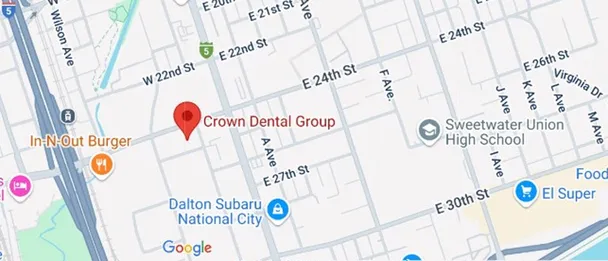
At Crown Dental Group in National City, our dental team can evaluate changes in how your teeth and mouth feel and provide personalized guidance on oral hygiene, interdental cleaning, and preventive dental care.
We serve patients throughout National City and nearby South Bay communities, including Chula Vista, Bonita, and Imperial Beach.
If your teeth frequently feel sticky, coated, or unusually difficult to clean, schedule an examination to determine what may be contributing to the sensation.
- Crown Dental Group
- 2405 Transportation Ave
- National City, CA 91950
- Phone: (619) 474-6200
- Email: info@crowndentalnc.com
Frequently Asked Questions
1. Why do my teeth feel sticky after eating?
Food residue, saliva, plaque, and certain food textures can make the teeth feel sticky after eating. Sugary and starchy foods are particularly likely to leave a noticeable coating.
2. Does sticky teeth mean I have plaque?
Not necessarily. Food residue can create a temporary sticky sensation, while plaque is a bacterial biofilm that adheres to tooth surfaces. Persistent coating may warrant a dental examination.
3. Why do my teeth still feel sticky after brushing?
Plaque or food debris may remain in areas that are difficult to reach with a toothbrush. Dry mouth or the ingredients in certain toothpastes may also contribute to the sensation.
4. Can dehydration make my teeth feel sticky?
Yes. Reduced hydration can contribute to a drier mouth and thicker saliva, which may make the teeth and oral tissues feel coated or sticky.
5. What foods make teeth feel sticky?
Caramel, gummy candy, dried fruit, bread, crackers, chips, frosting, peanut butter, and other sticky or starchy foods can leave residue on tooth surfaces.
6. Should I brush after every meal if my teeth feel sticky?
Not necessarily. Brushing twice daily with fluoride toothpaste and cleaning between the teeth are important. Drinking water after meals can also help clear loose food particles.
7. Why do my teeth feel sticky when I wake up?
Saliva production generally decreases during sleep, allowing bacteria and debris to accumulate. This can create a coated or sticky feeling that usually improves after drinking water and brushing.
8. When should I see a dentist about sticky teeth?
See your dentist if the sensation persists despite good oral hygiene, occurs with persistent dry mouth or bad breath, or is associated with a rough area, dental restoration, or another noticeable change.
Find us here