What Happens When You Ignore a Small Cavity? The Hidden Cost of Waiting
Learn what happens when a small cavity is left untreated and why early dental care can save your tooth, time, and money in National City, CA.
It’s Just a Small Cavity… Right?
Many people hear the words “small cavity” during a dental exam and assume it isn’t a big deal. After all, if the tooth doesn’t hurt, why rush into treatment?
This is one of the most common misconceptions in dentistry.
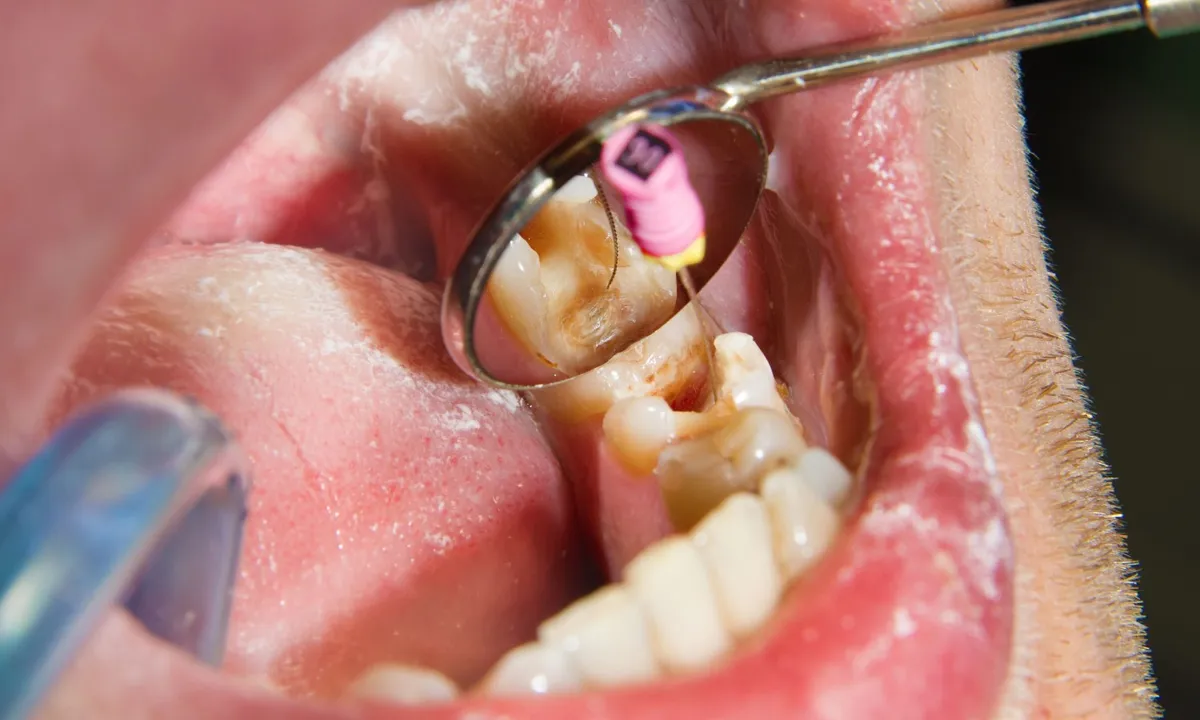
A cavity may start small, but it rarely stays that way. Tooth decay is a progressive disease, which means it continues to worsen over time unless it is treated. What begins as a minor area of damage in the enamel can eventually lead to infection, severe pain, tooth loss, and expensive restorative procedures.
At Crown Dental Group, we often see patients who wish they had addressed a cavity sooner. Understanding how cavities develop and what happens when they are ignored can help patients make informed decisions about their oral health.
Understanding What a Cavity Really Is
A cavity is a permanently damaged area in the tooth caused by bacterial activity.
Your mouth naturally contains bacteria. When these bacteria interact with sugars and carbohydrates from food and drinks, they produce acids.
These acids attack the tooth’s protective outer layer, known as enamel.
Over time, repeated acid exposure causes minerals to be lost from the enamel. Eventually, a hole or weak area develops. This is what dentists call a cavity.
Contrary to popular belief, cavities do not heal on their own once a hole has formed.
Without treatment, the decay continues moving deeper into the tooth.
The Anatomy of a Tooth
To understand how cavities progress, it’s helpful to understand tooth structure.
Each tooth contains several layers.
Enamel
Enamel is the hard outer layer of the tooth.
It is the strongest substance in the human body, but it is not indestructible.
Acid attacks gradually weaken enamel and create opportunities for bacteria to penetrate deeper.
Dentin
Beneath the enamel lies dentin.
Dentin is softer than enamel and contains tiny microscopic tubules that communicate with the inner portions of the tooth.
Once decay reaches dentin, the cavity often spreads much faster.
Pulp
At the center of the tooth is the pulp.
The pulp contains:
- Blood vessels
- Nerves
- Connective tissue
When bacteria reach the pulp, pain and infection often follow.
Stage One: Early Enamel Damage
Most cavities begin silently.
In the earliest stages, patients typically experience no symptoms at all.
The enamel begins losing minerals through a process called demineralization.
Signs may include:
- White spots on teeth
- Chalky-looking areas
- Slight discoloration
At this point, the damage may sometimes be reversible through preventive measures such as fluoride treatments and improved oral hygiene.
Unfortunately, most people don’t notice these changes on their own.
This is one reason routine dental exams are so important.
Stage Two: The Small Cavity Forms
Once enamel breaks down enough to create an actual cavity, professional treatment is generally necessary.
At this stage, the cavity is usually:
- Small
- Painless
- Easy to treat
Many patients feel tempted to postpone care because they aren’t experiencing discomfort.
However, this is often the ideal time for treatment.
A small cavity can frequently be repaired with a simple dental filling.
The procedure is typically straightforward, conservative, and cost-effective.
Unfortunately, many patients assume they have time to wait.
Why Cavities Continue to Grow
Unlike a scrape on your skin, a cavity cannot regenerate.
Teeth do not possess the ability to replace lost enamel.
Once bacteria establish themselves within a cavity, they continue producing acids and breaking down tooth structure.
Every day that passes provides additional opportunities for decay to progress.
The process may be slow, but it rarely stops on its own.
Stage Three: Decay Reaches the Dentin
As the cavity expands, it eventually penetrates through the enamel and reaches dentin.
This is often when symptoms begin.
Patients may notice:
- Sensitivity to cold foods
- Sensitivity to hot beverages
- Discomfort when eating sweets
- Occasional sharp pain
Because dentin is softer than enamel, decay tends to spread more rapidly once it reaches this layer.
The cavity that was once small and manageable may now require a larger filling.
More healthy tooth structure must be removed to eliminate the decay.
This means less natural tooth remains.
The Financial Impact of Waiting
One of the biggest misconceptions in dentistry is that delaying treatment saves money.
In reality, postponing care often increases costs.
Consider the progression:
Small Cavity
- Minor filling
- Conservative treatment
- Lower cost
Larger Cavity
- Larger filling
- More extensive treatment
- Greater expense
Advanced Decay
- Crown
- Root canal
- Possible extraction
The longer treatment is delayed, the more complex it often becomes.
Early intervention is almost always the most economical option.
Stage Four: Infection Reaches the Pulp
When decay reaches the pulp, bacteria begin affecting the tooth’s nerve tissue.
This is often when significant pain develops.
Common symptoms include:
- Persistent toothache
- Throbbing pain
- Sensitivity that lingers
- Pain while chewing
- Swelling
Many patients are surprised because the tooth may have felt completely normal only months earlier.
Once infection reaches the pulp, a simple filling is usually no longer sufficient.
What Is a Root Canal?
When the pulp becomes infected, root canal therapy may be recommended.
A root canal involves:
- Removing infected tissue
- Cleaning the inside of the tooth
- Disinfecting the canals
- Sealing the tooth
Despite their reputation, modern root canals are designed to relieve pain rather than cause it.
Root canal treatment often allows patients to save natural teeth that would otherwise be lost.
However, the procedure is significantly more involved than treating a small cavity.
Stage Five: The Tooth Weakens
As decay progresses and more tooth structure is lost, the tooth becomes weaker.
Large cavities can compromise the tooth’s ability to withstand normal chewing forces.
This increases the risk of:
- Cracks
- Fractures
- Broken cusps
- Structural failure
At this point, a dental crown may be necessary to protect the tooth.
Crowns cover and reinforce weakened teeth, helping prevent further damage.
While crowns are highly effective restorations, they require more extensive treatment than a simple filling.
Stage Six: Abscess Formation
If infection continues spreading beyond the pulp, an abscess may develop.
An abscess is a pocket of infection that forms near the root of a tooth.
Symptoms may include:
- Severe pain
- Facial swelling
- Fever
- Bad taste in the mouth
- Swollen lymph nodes
Dental abscesses should never be ignored.
Infections originating in the mouth can spread to surrounding tissues and potentially affect overall health.
Prompt treatment is essential.
When Extraction Becomes Necessary
Unfortunately, not every severely decayed tooth can be saved.
If decay destroys too much tooth structure or if infection becomes extensive, extraction may become the best option.
Dentists generally prioritize saving natural teeth whenever possible.
However, there are situations where removal is necessary to protect oral health.
The unfortunate reality is that many extractions could have been avoided if treatment had occurred earlier.
The Emotional Toll of Dental Problems
Ignoring a cavity affects more than just physical health.
Patients often experience:
- Anxiety
- Stress
- Sleep disruption
- Difficulty concentrating
- Embarrassment about their smile
Dental pain can interfere with work, social activities, and everyday life.
Many patients report wishing they had addressed the issue when it was still small.
Why Cavities Sometimes Stop Hurting
One dangerous misconception occurs when a painful tooth suddenly stops hurting.
Patients may assume the problem resolved itself.
In reality, the opposite may be true.
If the nerve inside the tooth dies due to infection, pain may temporarily disappear.
However, the infection often remains and may continue spreading.
Pain relief does not necessarily indicate healing.
This is why professional evaluation remains important.
Who Is Most at Risk for Cavities?
Several factors increase cavity risk.
Frequent Snacking
Repeated exposure to sugars provides bacteria with a constant food source.
Dry Mouth
Reduced saliva allows acids and bacteria to remain on teeth longer.
Poor Oral Hygiene
Inadequate brushing and flossing allow plaque accumulation.
High Sugar Consumption
Sugary foods and beverages accelerate decay.
Previous Dental History
Patients who have experienced cavities before may be more susceptible to future decay.
How Regular Dental Exams Help
Many cavities are discovered before symptoms appear.
During routine exams, dentists can identify:
- Early decay
- Weak enamel
- Existing restorations that may be failing
- Hidden cavities between teeth
Detecting problems early allows for more conservative treatment.
Preventive care is often the easiest and least expensive path to maintaining oral health.
How to Prevent Cavities
Fortunately, cavities are largely preventable.
Healthy habits include:
Brushing Twice Daily
Use fluoride toothpaste to strengthen enamel and remove plaque.
Flossing Every Day
Floss removes bacteria from areas toothbrushes cannot reach.
Limiting Sugary Foods
Reducing sugar intake decreases acid production.
Drinking Water
Water helps rinse away food particles and supports saliva production.
Routine Dental Visits
Regular examinations and cleanings allow for early detection and prevention.
Frequently Asked Questions
Can a small cavity heal on its own?
Once a cavity creates a hole in the tooth, professional treatment is generally required.
Why doesn’t my cavity hurt?
Early cavities often develop without symptoms.
How quickly do cavities grow?
Progression varies depending on oral hygiene, diet, and individual risk factors.
Is a filling better than waiting?
Yes. Treating decay early is typically simpler, less invasive, and less expensive.
Can cavities spread?
The bacteria causing decay can continue destroying tooth structure if left untreated.
What happens if decay reaches the nerve?
Root canal treatment or extraction may become necessary.
Are cavities common?
Yes. Cavities are one of the most common chronic health conditions worldwide.
How often should I have dental exams?
Most patients benefit from routine dental examinations as recommended by their dentist.
Small Cavities Become Big Problems When Left Untreated
A small cavity may seem insignificant today, but dental decay does not stop on its own. The longer treatment is delayed, the greater the likelihood of pain, infection, structural damage, and more extensive dental procedures.
The good news is that cavities are highly treatable when detected early.
At Crown Dental Group, our goal is to help patients preserve their natural teeth through preventive care, early diagnosis, and personalized treatment. Addressing a cavity while it is still small can protect your smile, save money, and prevent future complications.
Sometimes the smallest dental problems are the easiest to fix—if they’re treated before they become bigger ones.
Find us here