What Are Those Tiny Bumps on My Gums? Common Causes of Small Oral Bumps
Learn what small bumps on the gums can mean, from normal tissue variations and irritation to infections, cysts, and other dental concerns.
Noticing a small bump on your gums can be unsettling, especially when you are not sure whether it is something harmless or a sign of a dental problem.
Some bumps are temporary and develop because the tissue has been irritated. Others can be normal variations in the shape of the mouth. However, a raised area on the gums can also occur because of an infection, cyst, trauma, or another condition that requires professional evaluation.
The appearance of a bump alone is not enough to determine its cause. Its location, size, color, tenderness, duration, and changes over time can all provide important clues.
If you discover a new bump on your gums, understanding the possible causes can help you decide when it is appropriate to have it examined.
What Can Cause a Bump on the Gums?
Small oral bumps can develop for many different reasons.
Possible causes include:
- Normal anatomical variations
- Minor irritation or trauma
- Food-related irritation
- Localized inflammation
- Dental infections
- Cysts
- Irritation from dental appliances
- Healing tissue after dental treatment
- Other oral tissue changes
Some bumps disappear within a few days, while others remain unchanged for longer periods.
A bump that persists, grows, becomes painful, or develops other unusual characteristics should be evaluated by a dentist.
Some Bumps Are Normal Anatomical Features
Not every raised area in the mouth represents a dental problem.
The gums and surrounding oral tissues naturally have different contours and shapes. Certain areas may feel slightly raised or firm, particularly when you run your tongue over them.
Normal anatomical structures are generally:
- Stable over time
- Not painful
- Similar in appearance to surrounding tissue
- Not associated with swelling or drainage
If you have noticed the same small bump for years without any changes, it may simply be part of your normal oral anatomy.
However, if you are unsure whether something is normal, your dentist can examine it.
Irritation Can Cause a Temporary Bump
The soft tissues in your mouth can become irritated relatively easily.
A bump may appear after:
- Biting the inside of your mouth
- Eating sharp or hard foods
- Brushing too aggressively
- Accidentally injuring the gum
- Irritation from a dental appliance
- Repeated friction against a tooth
The tissue may become slightly swollen while it heals.
Minor irritation often improves once the source of the trauma is removed.
If the bump does not improve or continues to enlarge, it should be evaluated rather than assumed to be a simple injury.
Food Can Sometimes Irritate the Gum Tissue
Hard, sharp, or particularly abrasive foods can irritate the gum tissue.
For example, a sharp food fragment may press against the gum and create localized soreness or swelling.
The affected area may feel like a tiny bump when you run your tongue over it.
If the irritation is caused by something temporary, the tissue may gradually return to normal after the source is removed.
However, persistent swelling or pain may indicate that another problem is present.
Dental Appliances Can Irritate the Gums
Dentures, retainers, mouthguards, and other oral appliances can sometimes rub against the gums.
If an appliance does not fit properly or repeatedly contacts the same area, the tissue may become irritated.
You may notice:
- A sore spot
- A small raised area
- Redness
- Tenderness
- A recurring area of irritation
If a bump appears in the same location where an appliance contacts the tissue, tell your dentist.
An adjustment may be necessary to reduce repeated irritation.
A Gum Bump Can Sometimes Be Related to an Infection
One of the more important causes of a gum bump is a dental infection.
An infection around the root of a tooth can sometimes create a small raised area on the gum. In some cases, it may resemble a pimple.
This can occur when inflammatory material from an infected area creates a pathway toward the gum tissue.
Possible accompanying symptoms include:
- Tooth pain
- Tenderness
- Swelling
- A bad taste
- Drainage
- Pain when chewing
- Sensitivity
- Facial swelling
Importantly, an infection does not always cause severe pain.
A bump that repeatedly appears near the same tooth should therefore be examined even if it is not particularly painful.
What Is a Dental Abscess?
A dental abscess is a localized collection of pus associated with an infection.
An abscess can develop around the root of a tooth or within the surrounding tissues.
Depending on its location, it may appear as swelling or a raised bump on the gum.
An abscess requires professional dental treatment. Simply draining or squeezing the bump does not eliminate the source of the infection.
Treatment depends on the underlying cause and may involve procedures designed to treat the affected tooth or surrounding tissues.
Why You Should Not Pop a Gum Bump
It can be tempting to squeeze or puncture a bump that looks like a pimple.
Do not do this.
Attempting to pop a gum bump can injure the surrounding tissue and may introduce additional bacteria. More importantly, it does not address an underlying infection if one is present.
If the bump is caused by an infected tooth, the source of the infection needs to be identified and treated.
Let your dentist determine what the bump represents before attempting to manipulate it.
Can a Cyst Cause a Gum Bump?
Some cysts can occur in or around the jaw and teeth.
Dental cysts may develop in association with certain teeth or changes within the jawbone. Some remain small and produce few symptoms, while others can cause swelling or pressure as they develop.
A cyst cannot reliably be diagnosed based on appearance alone.
If your dentist suspects that a bump is associated with a deeper structure, dental imaging may be recommended to determine what is happening beneath the surface.
Where Is the Bump Located?
The location of a bump can provide useful information.
For example, a bump directly beside a specific tooth may be associated with that tooth or its surrounding tissues.
A bump farther along the gumline may have a different explanation.
Bumps can also occur on the palate, inside the cheeks, or other parts of the mouth, where different structures and conditions need to be considered.
When you notice a new bump, take note of its exact location so you can describe it accurately to your dentist.
What Does the Bump Look Like?
Appearance can provide clues, but it cannot establish a diagnosis.
Pay attention to:
- Size
- Color
- Shape
- Whether it is smooth or irregular
- Whether it feels soft or firm
- Whether it bleeds
- Whether it is painful
- Whether it changes over time
A bump that changes significantly should be evaluated.
Avoid repeatedly touching it with your fingers or tongue, since constant irritation can make the area more uncomfortable.
When Should You See a Dentist?
Not every small bump requires emergency treatment, but certain characteristics warrant an examination.
Schedule a dental appointment if the bump:
- Persists for more than a short period
- Gets larger
- Becomes painful
- Repeatedly returns
- Bleeds without an obvious cause
- Produces drainage
- Is associated with a toothache
- Appears alongside swelling
- Develops after dental treatment and does not improve
- Changes in color or texture
Your dentist can determine whether the bump appears to be a normal anatomical feature, temporary irritation, or something that requires treatment.
When Is a Gum Bump an Emergency?
A bump accompanied by significant swelling can sometimes indicate an infection that requires prompt treatment.
Seek urgent dental care if a gum bump is accompanied by:
- Significant facial swelling
- Severe dental pain
- Fever
- Difficulty swallowing
- Difficulty breathing
- Rapidly increasing swelling
- Severe weakness or illness
Difficulty breathing or swallowing associated with oral swelling requires emergency medical attention.
How Does a Dentist Evaluate a Gum Bump?
Your dentist will usually begin with a visual and physical examination.
They may assess:
- The size and appearance of the bump
- The surrounding gum tissue
- Nearby teeth
- Any tenderness
- Tooth mobility
- Signs of drainage or infection
If the cause is not obvious, dental X-rays or other imaging may be recommended.
The dentist may also examine the tooth closest to the bump because some gum swellings originate from problems associated with the underlying tooth.
Treatment Depends on the Cause
There is no single treatment for a gum bump.
Minor Irritation
If the bump is caused by temporary trauma, removing the source of irritation may allow the tissue to heal.
Dental Appliance Adjustment
If a denture, retainer, or mouthguard is irritating the tissue, your dentist may adjust the appliance.
Infection Treatment
If an infection is responsible, treatment will focus on eliminating the source of the infection. Depending on the tooth and the diagnosis, this may involve restorative or endodontic treatment.
Cyst or Other Tissue Changes
If the bump appears to involve deeper tissue, your dentist may recommend imaging, monitoring, referral, or additional treatment depending on the findings.
The important step is determining the cause before deciding how to treat it.
How Can You Protect Your Gum Health?
While not every oral bump can be prevented, good oral care can reduce certain dental problems.
Maintain Daily Oral Hygiene
Brush twice daily with fluoride toothpaste and clean between your teeth regularly.
Protect Your Mouth During Sports
A properly fitted mouthguard can reduce the risk of oral injuries.
Avoid Irritating Habits
Do not repeatedly bite, scratch, or manipulate areas of your gums.
Take Care of Dental Appliances
Clean removable appliances according to your dentist’s instructions and report areas that repeatedly rub or irritate the gums.
Keep Regular Dental Appointments
Routine dental examinations allow your dentist to identify changes in the teeth and oral tissues that you may not notice yourself.
Protect Your Smile at Crown Dental Group
A small bump on your gums can have a simple explanation, but it can also be associated with an infection or another dental condition. The appearance of the bump alone is not enough to determine what it means.
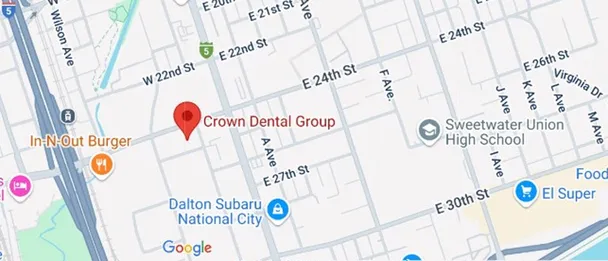
At Crown Dental Group in National City, our dental team can examine unusual bumps, swelling, and other changes in the oral tissues. If the cause is related to a tooth, infection, restoration, or another condition, we can recommend the appropriate next step.
We serve patients throughout National City and nearby South Bay communities, including Chula Vista, Bonita, and Imperial Beach.
If you have noticed a new or persistent bump on your gums, schedule an examination rather than trying to pop or treat it yourself.
- Crown Dental Group
- 2405 Transportation Ave
- National City, CA 91950
- Phone: (619) 474-6200
- Email: info@crowndentalnc.com
Frequently Asked Questions
1. Is a small bump on my gums always a problem?
No. Some bumps are normal anatomical features or temporary areas of irritation. However, a new or persistent bump should be evaluated if you are unsure about its cause.
2. Can an infection cause a bump on the gums?
Yes. An infection associated with a tooth can sometimes create a raised area on the gum that may resemble a small pimple.
3. Should I pop a bump on my gums?
No. Do not squeeze, puncture, or pop an oral bump. If it is related to an infection, doing so will not eliminate the underlying source and may further irritate the tissue.
4. How long does a gum bump take to go away?
The time depends on the cause. A minor irritation may improve after the source of trauma is removed, while an infection or other condition may persist until it receives appropriate treatment.
5. Can a cavity cause a bump on the gums?
A dental infection associated with an affected tooth can sometimes produce swelling or a bump on the nearby gum. A dentist can determine whether the tooth is involved.
6. Why does a gum bump keep coming back?
A recurring bump may indicate that the underlying cause has not been resolved. If it repeatedly appears in the same location, particularly near one tooth, have it evaluated.
7. Can a gum bump be a cyst?
Yes, some cysts can occur in or around the jaw and teeth. Imaging may be necessary to determine whether a bump is associated with a deeper structure.
8. When should I worry about a bump on my gums?
See your dentist if it persists, grows, repeatedly returns, bleeds, produces drainage, becomes painful, or occurs with tooth pain or swelling. Seek urgent care for significant swelling, fever, or difficulty swallowing or breathing.
Find us here