What Are Digital Dental Impressions? How Modern Scanning Works
Learn how digital dental impressions work, their benefits, and how dentists use 3D scans for crowns, bridges, and orthodontics in National City, CA.
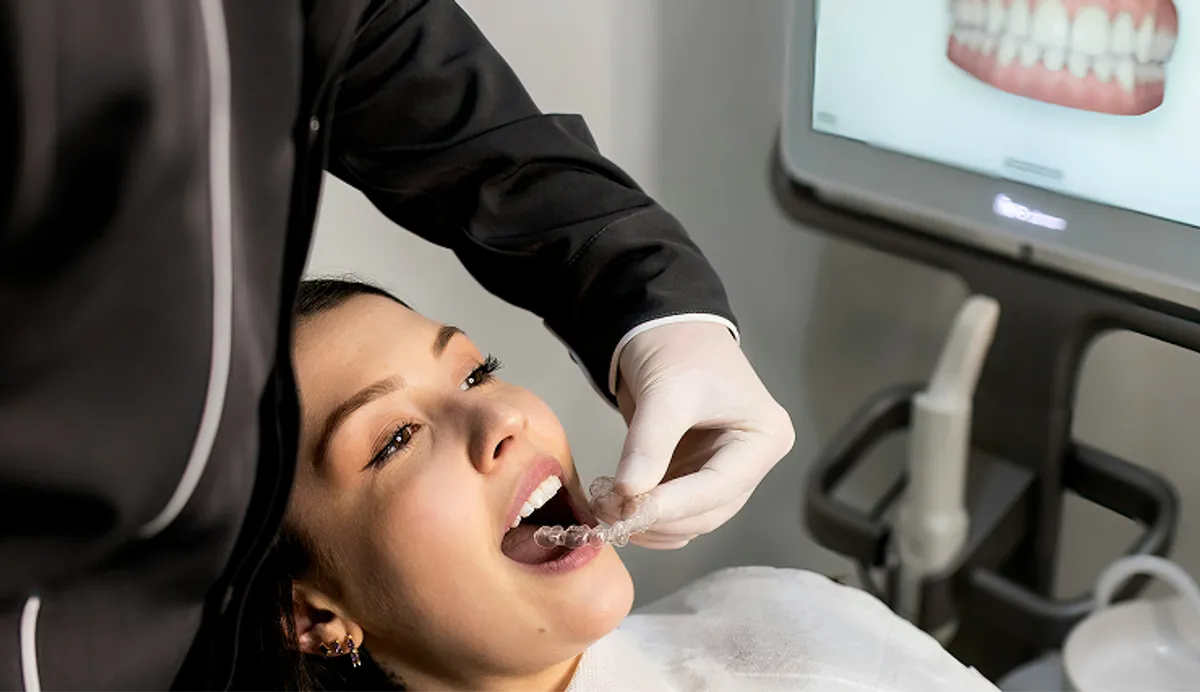
If you have ever needed a dental crown, bridge, or orthodontic treatment, you may remember having impression material placed in your mouth to create a mold of your teeth. Traditional dental impressions have been used for decades, but digital scanning offers another way to capture the shape of your teeth and surrounding oral structures.
Digital dental impressions use an intraoral scanner to create a three-dimensional representation of the teeth and, depending on the scan, nearby gum tissue. The resulting digital model can help dentists plan certain restorative and orthodontic treatments.
For many patients, this technology can make the impression-taking process more comfortable and provide a convenient way to review dental anatomy. However, digital scanning is not required for every procedure, and its suitability depends on the treatment being planned.
At Crown Dental Group in National City, California, digital impressions may be used when appropriate for evaluating and planning dental treatment.
What Are Digital Dental Impressions?
Digital dental impressions are electronic records of the shape and position of teeth and selected oral structures. They are created using an intraoral scanner, a handheld device that captures images of the mouth and combines them into a digital model.
Instead of relying on impression material to create a physical mold, the scanner collects information from the surfaces of the teeth. Specialized software processes the captured images into a three-dimensional representation that the dental team can review.
The scan may record details such as:
- The shape and contours of individual teeth.
- The position of teeth in relation to one another.
- The surfaces of prepared teeth for certain restorations.
- Portions of the gum tissue surrounding the teeth.
- The relationship between the upper and lower teeth, when the required records are captured.
The amount of information recorded depends on the scanner, the area scanned, and the purpose of the treatment.
A digital impression is different from a dental X-ray. An intraoral scanner records visible surface anatomy, while X-rays provide information about internal tooth structures and the supporting bone. These tools serve different purposes and may sometimes be used together.
How Does an Intraoral Dental Scanner Work?
An intraoral scanner is a small handheld device that the dental professional moves over the teeth. The scanner captures multiple images or optical measurements, depending on the technology, and the software combines them into a digital model.
Although the exact process varies between systems, a typical digital impression appointment involves several steps.
Step 1: Preparing the Mouth
The dentist or dental team first determines which teeth and areas need to be scanned.
Depending on the procedure, the teeth may need to be cleaned and dried so that the scanner can capture clear surface details. If the scan is being taken for a crown or bridge, the dentist may prepare the tooth before recording the final digital impression.
The preparation required depends on the treatment.
Step 2: Scanning the Teeth
The dental professional guides the scanner over the relevant surfaces of the teeth. The device captures images as it moves through the mouth, and the software uses these records to build the digital model.
You may be asked to open your mouth in different positions or move your tongue away from the area being scanned.
The process does not usually require impression material to be held in the mouth. However, you may still experience some pressure from the scanner or need to keep your mouth open during the procedure.
Step 3: Reviewing the Digital Model
The scan appears on a computer screen, allowing the dental team to review the captured areas.
The dentist can check whether the model includes the necessary details and identify areas that may need to be scanned again. If movement, moisture, or limited access affects the image quality, additional scanning may be required.
A digital model is only useful if it captures the information needed for the intended treatment.
Step 4: Using the Scan for Treatment Planning
Once the scan is complete, the digital file can be used for appropriate treatment-planning or laboratory workflows.
Depending on the procedure, it may help with designing a crown, bridge, orthodontic appliance, or another dental restoration. The dentist may also compare digital records taken at different times when monitoring changes in tooth position or other surface features.
The scan is one part of treatment planning. The dentist still needs to assess your oral health, bite, symptoms, and treatment goals before deciding on the appropriate care.
What Are Digital Dental Impressions Used For?
Digital impressions can support several types of dental treatment. Their usefulness depends on the procedure and the level of detail required.
1. Dental Crowns and Caps
A dental crown covers a tooth to restore its shape, strength, or function. Before a crown is made, the dentist needs an accurate record of the prepared tooth and the surrounding teeth.
A digital impression can capture the shape of the prepared tooth and nearby structures. This information may be used to design a restoration that fits the available space and relates appropriately to the surrounding teeth.
Digital scanning can also help record the opposing teeth and bite relationship when the necessary scans are obtained.
However, a good digital impression alone does not guarantee a perfect crown. The final result also depends on tooth preparation, material selection, laboratory or manufacturing processes, and the dentist’s clinical assessment.
2. Dental Bridges
A dental bridge replaces one or more missing teeth by using supporting teeth or, in some cases, dental implants.
Digital impressions can record the teeth and surrounding areas needed to design certain types of bridges. These records help the dental team and laboratory plan the shape and position of the restoration.
The dentist must also evaluate the health of the supporting teeth or implants, the condition of the gums, and the way the restoration will function during chewing.
Digital scanning is a method of capturing the required information, not a substitute for treatment planning.
3. Dental Implants
Digital impressions may be used during certain stages of implant treatment to record the position of implant components and surrounding teeth.
For example, an appropriate scan with the required components can help a dental team or laboratory design an implant-supported crown.
However, an intraoral scan does not show the internal structure of the jawbone or the exact position of anatomical structures beneath the gums. Other imaging, such as cone beam computed tomography (CBCT), may be recommended when three-dimensional information about the jaw is needed for implant planning.
The dentist determines which records are necessary based on the complexity of the case and the planned procedure.
4. Invisalign and Other Clear Aligners
Clear aligner treatment uses a series of removable trays to move teeth gradually into planned positions.
Digital impressions can help create a model of the teeth that is used in orthodontic planning and appliance fabrication. The digital model may be combined with photographs, bite records, and other clinical information.
The scan itself does not determine whether clear aligners are suitable. An orthodontic assessment is needed to evaluate tooth alignment, bite relationships, gum health, and the complexity of the desired movement.
Some cases may be suitable for clear aligners, while others may require braces or a different approach.
5. Other Restorative and Dental Appliances
Depending on the scanner and treatment workflow, digital impressions may also be used to support the fabrication of selected removable appliances, mouthguards, and other dental devices.
The specific application depends on the type of appliance and the accuracy requirements involved.
Not every appliance can be produced from an intraoral scan alone. Additional records or measurements may be needed to capture the information required for a safe and functional fit.
Digital Impressions vs. Traditional Dental Impressions
Traditional dental impressions use a material placed in a tray that is positioned over the teeth. Once the material sets, it forms a physical mold that can be used to produce a model.
Digital impressions use an optical scanner to record the teeth and create a digital model instead.
Both approaches can be appropriate for dental treatment. The choice depends on the procedure, the patient’s needs, the available equipment, and the dentist’s clinical judgment.
| Feature | Digital impressions | Traditional impressions |
|---|---|---|
| How they work | An intraoral scanner records tooth surfaces | Impression material forms a physical mold |
| Patient experience | Avoids a mouthful of setting impression material | Requires a tray and impression material |
| Review of records | The model can be reviewed on a screen | The physical impression is inspected |
| Corrections | Selected areas can often be rescanned | A new impression may be needed if the mold is inadequate |
| Digital workflow | Records can be transferred electronically | A physical impression may need to be transported or digitized |
| Suitability | Depends on the scanner and procedure | Remains useful for many procedures |
Neither method is automatically superior for every patient or every treatment. Digital scans can offer practical advantages, but traditional impressions remain appropriate in some clinical situations.
What Are the Benefits of Digital Dental Impressions?
A More Comfortable Experience for Many Patients
Some people find traditional impressions uncomfortable because the tray and impression material occupy space in the mouth. Others may experience a gag reflex or difficulty tolerating the setting material.
Digital scanning avoids the need for a tray filled with impression material, which may make the process easier for some patients.
However, scanning still requires access to the teeth and may involve keeping the mouth open for several minutes. Patients with a strong gag reflex, limited mouth opening, or other concerns should discuss comfort options with the dental team.
Immediate Review of the Scan
One advantage of digital scanning is that the dental team can review the model shortly after the images are captured.
If an area is missing or unclear, the professional may be able to rescan that section instead of repeating the entire process. This can help streamline certain appointments.
The quality of the result still depends on capturing the required surfaces accurately.
Convenient Digital Record Transfer
Digital impressions can be sent electronically to a dental laboratory or compatible treatment-planning system. This may simplify communication and reduce the need to transport a physical impression.
The workflow depends on the equipment, software, laboratory, and type of restoration being made.
Useful Visualization for Treatment Planning
Digital models allow the dental team to examine tooth surfaces and spatial relationships on a screen. For selected procedures, the model may also be used with design software to plan restorations or appliances.
This can help the dentist explain aspects of a proposed treatment, although the scan should be interpreted alongside the clinical examination and other relevant records.
Are There Limitations to Digital Dental Impressions?
Digital scanning is useful, but it has limitations.
Moisture, saliva, movement, restricted access, and the shape of the teeth can affect how easily a scanner captures certain areas. Some cases require additional scanning or a different impression technique.
The accuracy of the digital model also depends on the scanner, the scanning technique, and the specific clinical application. More complex restorations may require additional records or verification.
Digital impressions also do not replace every other diagnostic method. They cannot independently diagnose cavities beneath the enamel, evaluate internal tooth structures, or show the jawbone in the way dental imaging can.
In some situations, a traditional impression may be more appropriate. Your dentist will determine which method is best suited to the treatment being planned.
Do Digital Dental Impressions Hurt?
Digital impressions are generally noninvasive and should not cause pain by themselves. The scanner records the visible surfaces of the teeth without cutting or drilling them.
However, the experience can vary. You may feel pressure if the scanner touches the teeth or soft tissues, and holding your mouth open may cause temporary fatigue.
If the scan is being taken after a tooth has been prepared for a crown, the tooth itself may be sensitive because of the preparation, rather than because of the scanner.
Tell your dental team if you feel discomfort, need a short break, or have difficulty keeping your mouth open. They may be able to adjust the technique or divide the scan into smaller sections.
How Should You Prepare for a Digital Impression Appointment?
Most patients do not need extensive preparation for an intraoral scan.
To make the appointment more comfortable:
- Brush your teeth before the visit if practical.
- Tell the dental team if you have a strong gag reflex or difficulty opening your mouth.
- Mention any sensitive teeth or areas of discomfort.
- Follow any instructions provided for the specific procedure.
- Ask what the scan will be used for if you would like to understand the treatment process.
If the digital impression is part of a crown, bridge, implant, or orthodontic appointment, additional steps may be necessary. Your dentist will explain what to expect based on the procedure.
Are Digital Dental Impressions Safe?
Digital intraoral scanning is a noninvasive method of recording the visible surfaces of teeth. The scanning process itself does not use ionizing radiation.
This distinguishes it from dental X-rays, which use radiation to create images of teeth and surrounding structures.
A digital impression does not eliminate the need for X-rays or other imaging when those records are clinically necessary. For example, the dentist may still need radiographs to assess tooth roots, bone levels, or other structures that cannot be evaluated through a surface scan alone.
The appropriate combination of records depends on the patient’s dental condition and the intended treatment.
Experience Modern Dental Technology at Crown Dental Group
Digital dental impressions provide an alternative to traditional molds for many restorative and orthodontic procedures. They can support treatment planning for crowns, bridges, implants, and selected dental appliances while allowing the dental team to review a three-dimensional model of the teeth.
However, the technology is only one part of quality dental care. Accurate diagnosis, appropriate treatment planning, and careful evaluation of the final restoration remain essential.
At Crown Dental Group, patients can discuss their dental concerns and learn which diagnostic and treatment-planning methods may be appropriate for their needs.
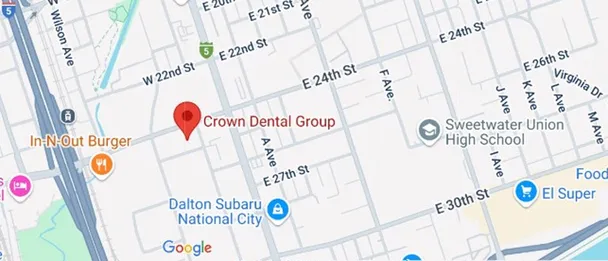
If you live in National City, Chula Vista, Bonita, Imperial Beach, or the surrounding South Bay San Diego communities, contact the office to ask about available dental services and arrange an appointment.
- Crown Dental Group
- 2405 Transportation Ave
- National City, CA 91950
- Phone: (619) 474-6200
- Email: info@crowndentalnc.com
Frequently Asked Questions
1. What is a digital dental impression?
A digital dental impression is an electronic model of the teeth and selected oral structures created using an intraoral scanner. It can be used to help plan and fabricate certain dental restorations and appliances.
2. Are digital impressions better than traditional impressions?
Digital impressions can be more comfortable for some patients and allow the dental team to review the scan immediately. Traditional impressions are still useful for many procedures. The most appropriate method depends on the treatment, equipment, and clinical circumstances.
3. How long does a digital dental scan take?
The time required depends on how many teeth need to be scanned, the purpose of the scan, and whether additional images are necessary. Many routine scans can be completed within several minutes, but more complex cases may take longer.
4. Can digital impressions be used for dental crowns?
Yes. Digital impressions can record the prepared tooth and surrounding teeth for certain crown procedures. The scan can help the dental team and laboratory design the restoration, although other clinical steps are still needed to ensure an appropriate fit and function.
5. Do digital impressions use radiation?
No. Intraoral scanners record visible tooth surfaces without using ionizing radiation. Dental X-rays are separate diagnostic tools that may still be needed to assess internal structures or the supporting bone.
6. Can digital impressions detect cavities?
Digital impressions are not a replacement for a dental examination or diagnostic imaging. They record surface anatomy but cannot independently identify every cavity, particularly decay between teeth or beneath existing restorations. Your dentist may use other methods to evaluate suspected decay.
7. Are digital impressions suitable for everyone?
Many patients can have digital impressions, but certain factors may affect scanning, including limited mouth opening, moisture, movement, or difficulty accessing particular areas. Your dentist can determine whether digital scanning or another impression method is appropriate.
8. Can digital impressions be used for Invisalign?
Digital impressions can be used to create tooth models for clear aligner planning. However, an orthodontic examination is necessary to determine whether clear aligners are suitable and to establish the appropriate treatment plan.
Find us here