Water Flosser vs. Traditional Floss: Which Is Better for Cleaning Between Your Teeth?
Water flosser vs. traditional floss: Compare their benefits, differences, and effectiveness to find the right way to clean between your teeth.

Brushing your teeth twice a day is an important part of maintaining good oral hygiene, but a toothbrush cannot effectively reach every surface between your teeth. Plaque and food debris can accumulate in these areas, which is why cleaning between your teeth is an essential part of preventive dental care.
Two common options are traditional dental floss and water flossers. Traditional floss uses a thin strand to physically clean between neighboring teeth, while a water flosser uses a pressurized stream of water to remove debris and disrupt plaque around the teeth and gumline.
Both methods can support oral health, but they work differently and may suit different needs. Understanding their advantages, limitations, and proper techniques can help you choose an option that fits your daily routine.
At Crown Dental Group in National City, CA, patients can receive guidance on oral hygiene products and techniques based on their individual dental needs.
What Is Traditional Dental Floss?
Traditional dental floss is a thin strand designed to clean the narrow spaces between teeth where toothbrush bristles may not reach effectively.
It is available in several forms, including waxed floss, unwaxed floss, dental tape, and specialized floss designed for certain dental appliances.
When used correctly, floss gently moves between neighboring teeth and along the sides of each tooth. This helps remove plaque and food particles that may otherwise remain in areas that are difficult to clean.
How Traditional Floss Works
Traditional floss relies on direct contact with the tooth surfaces.
To use it properly:
- Take approximately 18 inches of floss and wind most of it around your middle fingers.
- Hold a short section tightly between your thumbs and index fingers.
- Gently guide the floss between two teeth without snapping it against the gums.
- Curve the floss around one tooth to form a C shape.
- Move it gently up and down along the side of the tooth, reaching slightly beneath the gumline without forcing it.
- Repeat the process against the neighboring tooth surface.
- Move to a clean section of floss before cleaning the next space.
The technique matters. Simply pushing floss between teeth and removing it immediately may not adequately clean the surfaces where plaque accumulates.
Benefits of Traditional Floss
Traditional floss offers several practical advantages:
- Direct plaque removal: It physically contacts the sides of neighboring teeth to remove plaque.
- Affordable: Most types are inexpensive and widely available.
- Portable: Floss can easily be carried in a bag, pocket, or travel kit.
- No electricity required: It can be used anywhere without batteries or charging.
- Different options: Waxed, unwaxed, and tape-style floss allow users to choose a format that feels comfortable.
For people with closely spaced teeth, traditional floss can be particularly useful because its thin design allows it to access tight spaces.
Limitations of Traditional Floss
Despite its benefits, traditional floss may be challenging for some people.
Patients with limited hand dexterity, arthritis, or difficulty coordinating their fingers may find it difficult to maneuver floss around the back teeth.
It can also be challenging to use around certain dental appliances, bridges, and orthodontic wires. These situations may require specialized floss, floss threaders, or other interdental cleaning tools.
Incorrect technique can also cause discomfort or irritation. Snapping floss into the gums or applying excessive pressure may lead to tenderness or bleeding.
What Is a Water Flosser?
A water flosser is an oral hygiene device that directs a controlled stream of water between teeth and along the gumline.
It typically consists of a water reservoir, a motor or pressure mechanism, and a handheld nozzle that directs the water.
Some models are countertop devices with larger reservoirs, while others are cordless and designed for portability.
Unlike traditional floss, a water flosser does not rely on a strand making direct contact with the tooth surfaces. Instead, the water stream helps dislodge food particles and disrupt plaque in areas that are difficult to reach with a toothbrush.
How a Water Flosser Works
A water flosser sends a pulsating or controlled stream of water through a small nozzle.
To use one:
- Fill the reservoir with lukewarm water.
- Select a pressure setting that feels comfortable.
- Place the nozzle in your mouth before turning the device on.
- Lean over the sink to allow excess water to drain.
- Direct the stream toward the gumline and between the teeth.
- Move slowly from one tooth to the next, paying attention to the spaces between neighboring teeth.
- Follow the manufacturer’s instructions for cleaning and storing the device.
Start with a lower pressure setting if you are new to water flossing. You can adjust it gradually if needed, provided the pressure remains comfortable.
Benefits of Water Flossers
Water flossers offer several advantages, particularly for people who find traditional floss difficult to use.
- Convenient for some users: The handheld nozzle may be easier to maneuver than a strand of floss.
- Useful around dental appliances: Water can reach around braces, wires, and certain dental restorations.
- Helps remove food debris: The stream can flush out particles trapped in spaces between teeth.
- Can support gum health: Research suggests water flossers can help reduce plaque and gingival inflammation when used appropriately.
- Adjustable pressure: Many devices offer different settings to accommodate comfort and individual needs.
For people who struggle with manual flossing, a water flosser may make daily interdental cleaning easier to maintain.
Limitations of Water Flossers
Water flossers also have limitations.
They generally cost more than traditional floss and require regular cleaning and maintenance. Countertop models need space, access to electricity, and occasional reservoir refilling.
Some people may also find the water pressure uncomfortable, particularly if they have sensitive gums or existing oral irritation.
A water flosser may remove debris effectively, but it does not always provide the same direct mechanical contact with tooth surfaces as traditional floss. For this reason, it should not automatically be considered a complete replacement for every type of interdental cleaning.
Water Flosser vs. Traditional Floss: What Is the Difference?
Both methods help clean between teeth, but their mechanisms, convenience, and suitability differ.
| Feature | Traditional floss | Water flosser |
|---|---|---|
| Cleaning method | Physical contact with tooth surfaces | Pressurized stream of water |
| Plaque removal | Scrapes plaque from the sides of teeth | Disrupts plaque and flushes debris |
| Tight spaces | Often effective in closely spaced teeth | Effectiveness depends on access and technique |
| Braces | May require threaders or specialized floss | Can help clean around brackets and wires |
| Dexterity | Requires manual coordination | May be easier for some people with limited dexterity |
| Cost | Generally inexpensive | Higher initial cost |
| Portability | Easy to carry | Depends on the model |
| Maintenance | Replace after use | Requires reservoir and nozzle cleaning |
Neither method is universally better for every patient. The most appropriate option depends on your dental anatomy, existing restorations, oral health, and ability to use the product consistently.
Which Is More Effective at Removing Plaque?
Both traditional floss and water flossers can help improve interdental cleaning, but they do so differently.
Traditional floss physically contacts the tooth surfaces, helping remove plaque from areas where teeth touch or sit close together. When used with the correct technique, it can be particularly useful for cleaning narrow spaces.
Water flossers use water pressure to disrupt plaque and remove debris around the gumline and between teeth. Some research has found that water flossing can be effective in reducing gingival inflammation and bleeding, although results vary depending on the device and how it is used.
It is important to distinguish between removing visible food particles and disrupting plaque. A space may look clean after using a water flosser, but that does not necessarily mean all plaque has been removed.
The effectiveness of either method depends on consistency, technique, and individual dental conditions.
Which Option Is Better for People With Braces?
People wearing traditional braces often find interdental cleaning more challenging because brackets and wires create additional areas where food and plaque can accumulate.
Traditional floss can still be used, but it may require a floss threader or orthodontic floss designed to pass beneath the wire.
A water flosser can be a convenient option because the water stream can reach around brackets, wires, and other orthodontic components.
However, using a water flosser does not eliminate the need to brush carefully around brackets and along the gumline. Patients with braces should follow the cleaning instructions provided by their dentist or orthodontist.
The best approach may involve combining a toothbrush, an interdental brush, and a water flosser or specialized floss.
Which Is Better for Dental Bridges, Crowns, and Implants?
Dental restorations can create areas that require additional attention during daily cleaning.
Dental Bridges
A dental bridge replaces missing teeth by using supporting teeth or implants. Food and plaque can collect beneath the artificial tooth, where ordinary floss may not easily reach.
Specialized floss threaders, bridge floss, or interdental brushes may help clean beneath the bridge. A water flosser can also help flush debris from these spaces.
Your dentist can demonstrate the most suitable technique based on the design of your bridge.
Dental Crowns
A dental crown covers an existing tooth but does not eliminate the need to clean around it. Plaque can accumulate near the gumline and around the edges of the restoration.
Traditional floss can clean the contact areas between crowned teeth, while a water flosser may help clean around the gumline.
The choice depends on your dental anatomy and the fit of the restoration.
Dental Implants
Implants require careful cleaning because the surrounding gum tissue and supporting bone can still develop inflammation.
Traditional floss, specialized implant floss, and interdental brushes may be useful depending on the implant restoration.
Water flossers can also help clean around implant-supported crowns, bridges, and dentures when used according to professional instructions.
If you have implants, ask your dentist which tools are appropriate. Certain implant designs require specific cleaning techniques to access areas beneath the restoration.
Can You Use a Water Flosser and Traditional Floss Together?
Yes. For some people, using both methods can provide a more complete interdental cleaning routine.
Traditional floss offers direct contact with the sides of neighboring teeth, while a water flosser can help remove debris around the gumline and in areas that may be difficult to access.
For example, you might use traditional floss for tight contacts and a water flosser around braces, bridges, or other dental appliances.
However, using both is not automatically necessary for everyone. Your dentist can help determine whether combining the methods provides additional value based on your oral health and daily cleaning habits.
The priority is maintaining a routine that effectively removes plaque without causing unnecessary irritation.
Common Mistakes to Avoid When Using Interdental Cleaning Tools
Regardless of which method you choose, incorrect technique can reduce its effectiveness.
Mistakes When Using Traditional Floss
- Snapping the floss forcefully against the gums.
- Cleaning only the space between teeth without contacting the sides of each tooth.
- Reusing the same section of floss throughout the mouth.
- Skipping the back teeth because they are difficult to reach.
- Stopping because of mild bleeding without addressing the possible cause.
If your gums bleed consistently during flossing, arrange a dental examination. Persistent bleeding can be associated with gum inflammation and should not automatically be considered normal.
Mistakes When Using a Water Flosser
- Using excessive pressure that causes discomfort.
- Directing the water stream incorrectly.
- Moving too quickly and missing areas between teeth.
- Failing to clean the device and reservoir regularly.
- Using the water flosser instead of brushing.
- Assuming that visible food removal means plaque has been completely removed.
Follow the manufacturer’s instructions and your dentist’s recommendations for safe and effective use.
How to Choose the Right Interdental Cleaning Method
The best choice is one that suits your dental needs and that you can use correctly every day.
Traditional floss may be a practical option if your teeth are closely spaced and you are comfortable handling the floss.
A water flosser may be worth considering if you wear braces, have certain dental restorations, or find manual flossing difficult.
Some patients may benefit from interdental brushes or specialized cleaning tools instead. These can be particularly useful when spaces between teeth are larger or when a bridge or implant restoration requires access beneath the artificial tooth.
During a dental examination, your dentist or hygienist can assess the spaces between your teeth and demonstrate the correct cleaning method.
Maintain Your Oral Health With Guidance From Crown Dental Group
Both water flossers and traditional dental floss can support better oral hygiene when used correctly. The important difference is how they clean between teeth and which method is most suitable for your individual needs.
Traditional floss provides direct contact with tooth surfaces, while water flossers use a controlled stream of water to help remove debris and disrupt plaque. Depending on your dental condition, using one method or combining different cleaning tools may be appropriate.
At Crown Dental Group, patients can receive guidance on preventive dental care, professional cleanings, and proper oral hygiene techniques.
If you are in National City, Chula Vista, Bonita, Imperial Beach, or the surrounding South Bay San Diego communities, contact the office to schedule an appointment and discuss the best way to care for your teeth and gums.
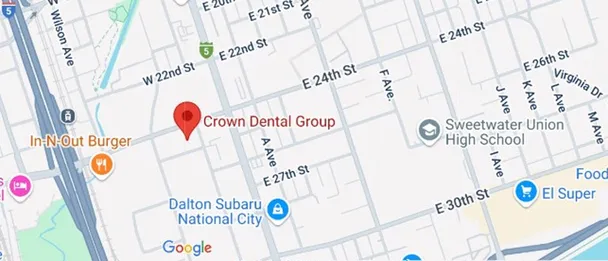
- Crown Dental Group
- 2405 Transportation Ave
- National City, CA 91950
- Phone: (619) 474-6200
- Email: info@crowndentalnc.com
Frequently Asked Questions
1. Is a water flosser better than traditional floss?
Neither option is universally better. Traditional floss physically removes plaque from the sides of teeth, while water flossers use water pressure to disrupt plaque and flush away debris. The right choice depends on your dental condition, cleaning needs, and ability to use each method correctly.
2. Can a water flosser replace traditional dental floss?
A water flosser can be an effective interdental cleaning option, particularly for people who have braces or difficulty handling traditional floss. However, it does not provide the same direct mechanical contact with tooth surfaces. Your dentist can help determine whether it is suitable as your primary interdental cleaning method or whether you should combine it with floss.
3. Should I use a water flosser before or after brushing?
You can use a water flosser before or after brushing, depending on your routine. The important thing is to clean between your teeth consistently every day. Follow the instructions provided with your device and your dentist’s recommendations.
4. Can water flossers damage gums?
Water flossers are generally safe when used correctly. However, excessive pressure or improper positioning may cause discomfort or irritation. Start with a low setting and adjust only if comfortable. If you experience persistent pain or bleeding, consult your dentist.
5. Are water flossers effective for people with braces?
Yes. Water flossers can help remove food debris and disrupt plaque around orthodontic brackets and wires. They may be a useful addition to brushing and other interdental cleaning tools during orthodontic treatment.
6. Can I use a water flosser if I have dental implants?
Yes, water flossers may be suitable for cleaning around certain implant-supported restorations. However, implant care depends on the design of the restoration. Ask your dentist which nozzle, pressure setting, and cleaning technique are appropriate.
7. Why do my gums bleed when I floss?
Bleeding may occur when gums are inflamed, particularly if plaque has accumulated along the gumline. Incorrect flossing technique can also irritate the tissue. If bleeding continues, schedule a dental examination to determine the cause.
8. How often should I use a water flosser or traditional floss?
Interdental cleaning should generally be performed once daily. Whether you use traditional floss, a water flosser, or another suitable cleaning tool depends on your individual dental needs and your dentist’s recommendations.
Find us here