The Definitive Clinical Guide to Root Canal Therapy & Endodontics in National City, CA: Biological Mechanics, Pain Relief, and Tooth Preservation
Save your natural tooth and eliminate severe tooth pain with Root Canal Therapy at Crown Dental Group in National City, CA. Call (619) 474-6200 for care.
Throbbing, persistent tooth pain is one of the most debilitating sensory experiences a person can endure. Whether triggered by deep decay, an unmanaged crack, or physical trauma, severe dental pain typically signals a critical biological emergency: an infected or necrotic dental pulp. Beyond the acute physical agony, patients suffering from deep endodontic infections often experience extreme anxiety, difficulty sleeping, missed workdays, and fear of losing their natural teeth.
A common misconception is that root canals cause pain. In reality, modern endodontic therapy eliminates pain by removing the inflamed, dying tissue inside the tooth while preserving the natural outer root and crown structure.
At Crown Dental Group, located at 2405 Transportation Ave, National City, CA 91950, we combine high-tech diagnostic digital radiography, rotational nickel-titanium instrumentation, and biomimetic obturation materials to perform comfortable, highly predictable root canal therapy. Preserving your natural root structure is almost always the best strategy for maintaining long-term masticatory (chewing) function, jawbone density, and facial symmetry.
The Clinical Science: Endodontic Histopathology and Micro-Systemic Anatomy
To appreciate how root canal therapy saves a compromised tooth, it is vital to examine the internal anatomy of a tooth and the biological cascade of endodontic infection.
The Anatomy of the Pulp Complex: Pulpitis to Necrosis
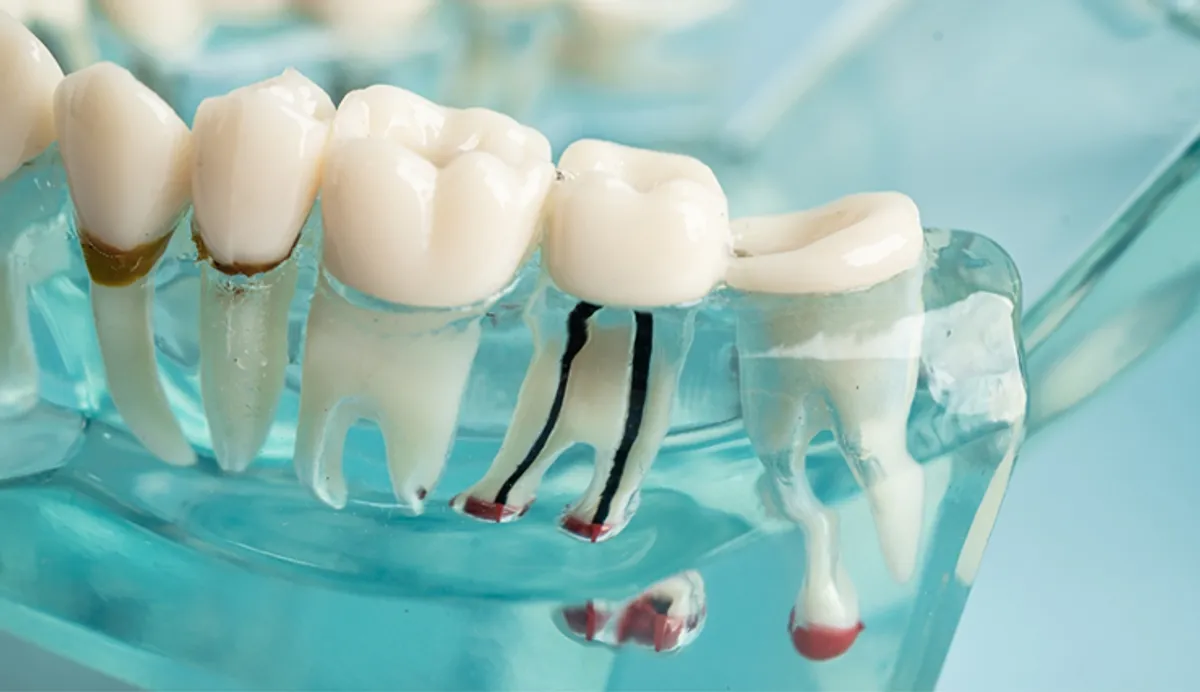
Deep inside every tooth beneath the protective enamel and dentin lies the pulp chamber and root canal system. This internal space houses specialized connective tissue, blood vessels, lymphatic drainage, and nerve fibers (primarily sensory C-fibers and A-delta fibers) that enter through the apical foramen at the tip of the root.
- Reversible Pulpitis: When bacteria from deep decay approach the pulp, early inflammatory responses trigger localized pressure. At this stage, the tooth reacts with brief, mild sensitivity to hot or cold stimuli. If the decay is promptly removed, the pulp can heal.
- Irreversible Pulpitis: If bacterial invasion reaches the pulpal tissue, the inflammatory cascade accelerates. Blood vessels dilate (hyperemia), but because the pulp is enclosed within rigid dentin walls, the resulting tissue edema causes an intense rise in internal hydrostatic pressure. This pressure compresses sensory nerve fibers, causing severe, spontaneous, and lingering throbbing pain.
- Pulpal Necrosis & Apical Periodontitis: Deprived of adequate blood flow due to extreme internal pressure, the pulp tissue dies (necrosis). Bacteria proliferate throughout the complex root canal network, exiting through the root tip (apical foramen) into the surrounding bone. This leads to periapical periodontitis, bone destruction, and the formation of a painful dental abscess or localized pus cavity.
Biomechanical Disinfection: Rotary NiTi Instrumentation & Sodium Hypochlorite
Saving an infected tooth requires meticulous chemo-mechanical disinfection of the intricate, micro-microscopic canal space:
- Rotary Nickel-Titanium (NiTi) Files: Endodontists and clinicians historically used stiff, stainless-steel hand instruments that struggled to navigate curved root canals. Modern rotary NiTi instruments possess super-elasticity and shape-memory properties. They effortlessly flex through complex, curved root canals, shaping and enlarging the canal walls smoothly without perforating or altering the natural root pathway.
- Ultrasonic Irrigation & Fluid Dynamics: Bacteria do not live merely in the main central canal; they hide deep inside microscopic lateral canals and dentinal tubules. We utilize chemical irrigants—predominantly Sodium Hypochlorite (NaOCl) and EDTA—activated by ultrasonic soundwaves. This process creates acoustic streaming and micro-cavitation, dissolving organic tissue remnants, killing bacterial biofilms, and opening clogged dentinal tubules.
- Biocompatible Obturation (Gutta-Percha & Bioceramic Sealers): Once completely disinfected, the empty canal system must be hermetically sealed to prevent future re-infection. We fill the space with Gutta-Percha (a natural, biocompatible thermoplastic latex resin) combined with advanced Bioceramic Sealers. Bioceramics expand slightly upon setting, forming a leak-proof chemical bond with the internal dentin walls.
Root Canal Therapy vs. Tooth Extraction: Preservation vs. Replacement
Patients often ask whether it is better to save a damaged tooth with a root canal or simply pull (extract) it. While extraction may seem like an easy short-term fix, preserving your natural tooth root remains the gold standard in modern dentistry whenever structurally possible.
The Biological Advantage of Natural Proprioception
Your natural tooth root is connected to the jawbone via the periodontal ligament, which contains rich mechanoreceptors. These nerve endings provide proprioception—the precise sensory feedback that lets your brain judge chewing force, texture, and bite position. An extraction removes this natural sensory connection.
Even a high-end dental implant lacks a periodontal ligament. Keeping your natural tooth root through root canal therapy maintains your natural bite mechanics and sensory feedback.
Preventing Adjacent Tooth Drift and Structural Collapse
When a tooth is extracted and not replaced immediately, the surrounding arch balance is disrupted. Neighboring teeth drift into the gap, opposing teeth over-erupt down into the space, and localized jawbone loss begins. Preserving the tooth with a root canal avoids these structural complications.
The Endodontic Patient Journey at Crown Dental Group
At Crown Dental Group, we prioritize patient comfort, precise digital diagnostics, and long-lasting restorative strength.
Phase 1: High-Resolution Digital Diagnostics
Your visit begins with targeted diagnostic testing to pinpoint the source of pain:
- Digital Radiography & CBCT Scans: Low-radiation digital X-rays and 3D CBCT scans reveal the precise internal canal geometry, root curvatures, and periapical bone lesions.
- Vitality Testing: We perform cold sensitivity and endodontic palpation tests to evaluate pulpal health across neighboring teeth.
Phase 2: Comfort-First Pain Management and Isolation
- Proactive Anesthesia: We administer local anesthesia to ensure the tooth and surrounding tissues are completely numb before treatment begins.
- Rubber Dam Isolation: A flexible rubber sheet is placed over the tooth. This keeps the work area sterile, prevents saliva from contaminating the open canals, and protects you from swallowing any irrigation solutions.
Phase 3: Precision Shaping, Disinfection, and Obturation
- Pulp Removal: A small, conservative access opening is made through the chewing surface of the tooth to access the pulp chamber.
- Rotary Cleaning: Micro-rotary NiTi files remove the infected pulpal tissue and shape the internal canal walls.
- Chemical Sterilization: Ultrasonic-activated sodium hypochlorite solution flushes away bacteria from microscopic tubules and lateral branches.
- Obturation: The sanitized root canals are filled with warm gutta-percha and bioceramic sealer, permanently sealing the root canal system.
Phase 4: Structural Reinforcement with a Custom Crown
Because a tooth that has lost its internal blood supply becomes drier and more brittle over time, placing a full-coverage ceramic crown is essential to prevent fracture—especially on back molars subject to heavy chewing forces. Our team rebuilds the core of the tooth and covers it with a custom-milled crown, fully restoring its strength, bite, and natural appearance.
Frequently Asked Questions (FAQs) About Root Canal Therapy
Q1: Is a root canal painful?
No! Modern local anesthetics make root canal therapy as comfortable and painless as getting a routine dental filling. The goal of a root canal is to eliminate the severe pain caused by an infected tooth pulp, giving you immediate relief.
Q2: What are the signs that I might need a root canal?
Common symptoms of pulpal infection include:
- Severe, throbbing tooth pain that keeps you awake at night.
- Lingering pain when eating or drinking hot or cold foods.
- Pain or tenderness when biting down or chewing.
- Swollen, tender gums or a small bump (fistula) on the gums near the painful tooth.
- Dark discoloration of a single tooth following physical trauma.
Q3: How many appointments does a root canal take?
Most standard root canal treatments are completed in a single visit lasting about 60 to 90 minutes. In cases of severe infection or complex root structures, a second short visit may be scheduled to ensure complete disinfection before placing the final filling and crown.
Q4: Can I go back to work or school after getting a root canal?
Yes. Most patients resume their normal daily activities right after their appointment. Your mouth will remain numb for 2 to 4 hours following the procedure, so we advise waiting until the numbness wears off completely before eating.
Q5: What should I expect during recovery?
It is normal to experience mild tenderness in the surrounding jaw tissue or gumline for a few days, especially when biting down. This mild post-treatment sensitivity is easily managed with over-the-counter pain relievers like ibuprofen or acetaminophen.
Q6: Why do I need a crown after a root canal?
Removing the pulp removes the tooth’s internal blood supply, making the remaining structure drier and more susceptible to cracking under heavy chewing pressure. Placing a custom ceramic crown caps the tooth 360 degrees, restoring its structural integrity and preventing fractures.
Q7: Can a tooth that had a root canal get a cavity again?
Yes. Although the internal pulp tissue is gone and the tooth can no longer feel temperature, the outer surface of the tooth or the margin where the crown meets the tooth can still develop decay if oral hygiene is neglected. Daily brushing, flossing, and routine dental checkups remain essential.
Q8: What happens if I ignore an infected tooth and don’t get a root canal?
Dental infections do not resolve on their own. If left untreated, the bacterial infection will continue to destroy surrounding jawbone tissue, expand into a painful abscess, and potentially spread to other spaces in the face and neck, eventually requiring an emergency tooth extraction.
Relieve Your Pain and Save Your Tooth Today
Don’t let severe tooth pain disrupt your life. Experience gentle, state-of-the-art endodontic care and restore your health at Crown Dental Group.
Contact our compassionate team today to schedule an emergency evaluation or endodontic consultation!
- Practice Name: Crown Dental Group
- Address: 2405 Transportation Ave, National City, CA 91950
- Phone: (619) 474-6200
- Email: info@crowndentalnc.com
- Service Area: National City, Chula Vista, Bonita, Imperial Beach, San Ysidro, and South Bay San Diego.
Call (619) 474-6200 or email info@crowndentalnc.com to reserve your appointment today!
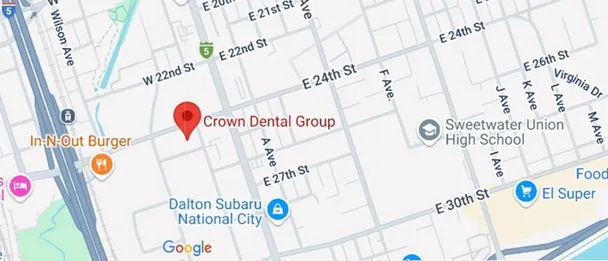
Find us here