Root Canal Treatment: What It Really Feels Like and Why It Can Save Your Tooth
Learn what a root canal feels like, why root canal treatment is needed, what happens during the procedure, and how it can save a damaged tooth.
Root Canal Treatment Doesn’t Have to Be Something You Fear
Few dental procedures have a worse reputation than a root canal. For many patients, simply hearing the words “root canal” brings to mind severe pain, complicated treatment, and an uncomfortable dental experience. Some people even delay making an appointment because they are afraid that treatment will hurt. Modern root canal treatment is very different from the experience many people imagine.
In fact, the purpose of a root canal is often to relieve the pain caused by an infected or inflamed tooth, not create it. When the inside of a tooth becomes infected or severely inflamed, bacteria can affect the soft tissue containing the tooth’s nerves and blood vessels. Without treatment, the infection may progress, potentially leading to an abscess, bone damage, or tooth loss. A root canal allows the dentist to remove the damaged tissue, clean the inside of the tooth, seal it, and preserve the natural tooth whenever possible.
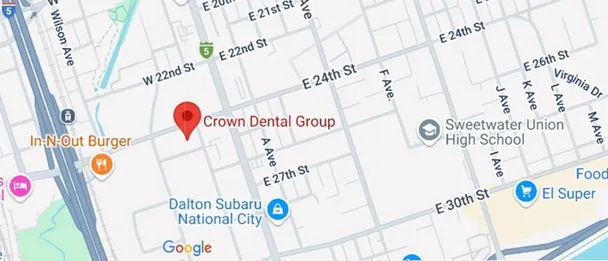
At Crown Dental Group, located at 2405 Transportation Ave, National City, CA 91950, we provide restorative and general dental care designed to help patients maintain their natural teeth and avoid unnecessary extractions. Understanding what actually happens during root canal treatment can make the process feel much less intimidating.
What Is a Root Canal?
A root canal is a dental procedure used to treat infection or inflammation inside a tooth. To understand why it is necessary, it helps to understand the basic anatomy of a tooth. The outside of the tooth consists of hard enamel and dentin. Inside these protective layers is the pulp, which contains nerves, blood vessels, and connective tissue.
The pulp is important while a tooth is developing. However, once a tooth is fully mature, it can continue functioning without the pulp because it receives support from the surrounding tissues. When bacteria reach the pulp through deep decay, cracks, trauma, or other damage, the tissue can become inflamed or infected.
A root canal removes the affected pulp and cleans the internal space of the tooth.
Why Would Someone Need a Root Canal?
A root canal is generally recommended when the pulp inside a tooth has become irreversibly inflamed or infected. Several situations can cause this.
Deep Tooth Decay
A cavity begins in the outer layers of a tooth. If decay is allowed to progress, it can eventually reach the pulp. At this stage, a simple filling may no longer be enough to save the tooth.
Cracked or Fractured Teeth
A crack can create a pathway for bacteria to reach the inner portion of the tooth. Some cracks cause immediate pain, while others produce symptoms that come and go. If the pulp becomes infected, root canal treatment may be necessary.
Dental Trauma
A tooth can sustain internal damage even when there is little visible damage on the outside. A previous injury may eventually cause the pulp to die or become infected.
Repeated Dental Procedures
A tooth that has undergone multiple procedures may become irritated or weakened over time. In some cases, root canal treatment becomes necessary to address problems within the tooth.
What Does an Infected Tooth Feel Like?
Symptoms can vary considerably. Some patients experience severe pain, while others have surprisingly few symptoms.
Possible warning signs include:
- Persistent toothache
- Throbbing pain
- Sensitivity to hot or cold
- Pain when chewing
- Tenderness around the tooth
- Swollen gums
- A small bump on the gums
- Discoloration of the tooth
- Facial swelling
Importantly, the absence of pain does not always mean the tooth is healthy.
Sometimes the nerve inside a severely damaged tooth stops functioning. When that happens, the intense sensitivity may disappear even though infection remains.
Does a Root Canal Hurt?
This is one of the biggest concerns patients have. With modern dental anesthesia, the procedure itself is generally performed while the area is numb. Patients may feel pressure, vibration, or movement during treatment, but they should not experience the severe pain commonly associated with the outdated reputation of root canals.
In many cases, the toothache that existed before treatment is actually more uncomfortable than the procedure itself. After treatment, some temporary tenderness may occur as the surrounding tissues recover. Your dentist can provide specific instructions based on your condition and treatment.
What Happens During a Root Canal?
Although every case is different, root canal treatment generally follows several stages.
Step 1: Examination and Diagnosis
Your dentist first evaluates the tooth and your symptoms. Digital radiographs may be used to determine:
- The extent of infection
- Root anatomy
- Bone involvement
- The condition of surrounding structures
The goal is to confirm that root canal treatment is appropriate.
Step 2: Local Anesthesia
The area around the affected tooth is numbed. This is an important part of keeping the procedure comfortable.
Step 3: Accessing the Inside of the Tooth
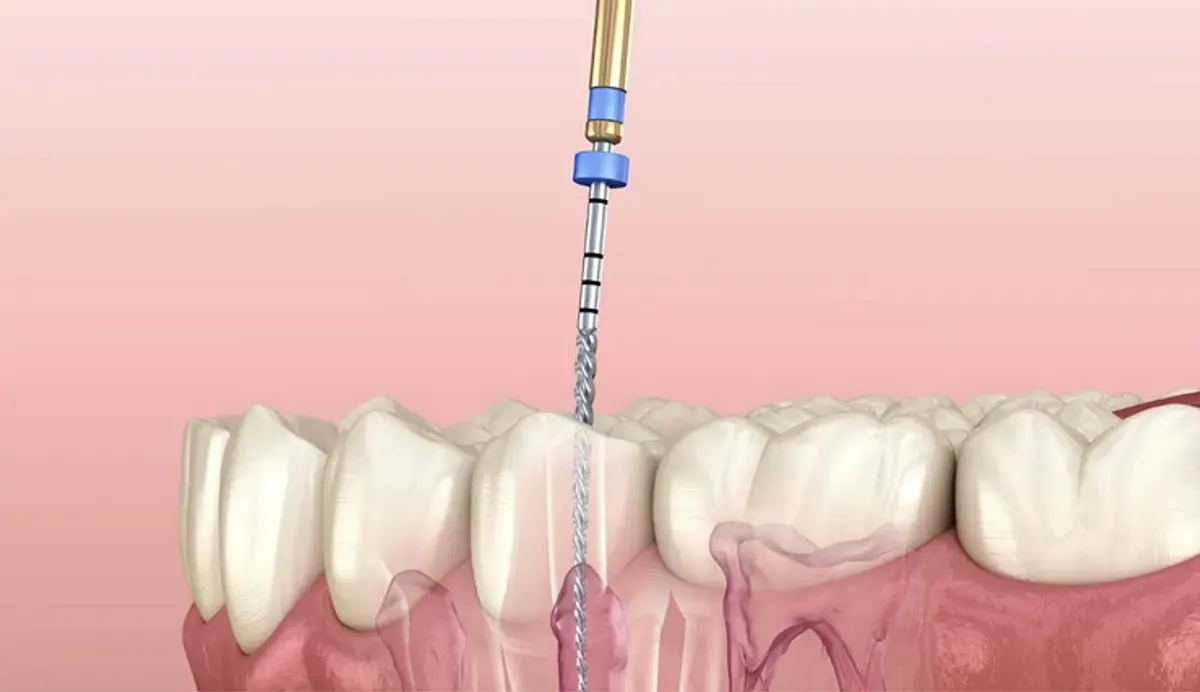
The dentist creates a small opening in the tooth to access the pulp chamber and root canals.
Step 4: Removing the Damaged Tissue
The infected or inflamed pulp is carefully removed. The dentist then cleans and shapes the internal canals.
Step 5: Disinfecting the Canals
The internal spaces are thoroughly cleaned to reduce bacteria and remove remaining debris. This step is critical because bacteria left inside the tooth can contribute to continued infection.
Step 6: Sealing the Tooth
Once the canals have been cleaned and prepared, they are filled and sealed. The objective is to prevent bacteria from re-entering the treated space.
Step 7: Restoring the Tooth
After a root canal, the remaining tooth structure may need additional protection. Depending on the condition of the tooth, a dental crown may be recommended. A crown surrounds the tooth and helps protect it from fracture during normal chewing.
Why Does a Root Canal Often Need a Crown?
Root canal treatment addresses the infection inside the tooth, but the tooth itself may remain structurally weakened.
A crown provides full coverage and helps restore:
- Strength
- Shape
- Function
- Appearance
This is particularly important for molars, which absorb significant chewing forces. Your dentist will determine whether a crown is appropriate based on the amount of remaining tooth structure and the location of the tooth.
What Happens If You Don’t Get a Root Canal?
When a tooth’s pulp is infected, the problem generally does not resolve on its own. Without treatment, infection may spread beyond the tooth.
Potential complications include:
- Dental abscess
- Swelling
- Bone loss
- Severe pain
- Tooth loss
In some cases, the infection can become a dental emergency.
Early treatment can help prevent these complications.
Root Canal vs. Tooth Extraction
When a tooth is severely infected, patients may wonder whether extraction is easier. Extraction removes the immediate source of infection, but it also leaves a missing tooth.
Replacing that tooth may require:
- Dental implants
- Bridges
- Dentures
Whenever a natural tooth can be predictably restored, preserving it is often preferable. A root canal allows the original tooth to remain in place and continue functioning.
How Long Does a Root Canal Take?
Treatment time varies depending on the tooth and the complexity of the root anatomy. Front teeth generally have fewer canals than molars, while molars can require more extensive treatment. Your dentist can provide a more accurate estimate after examining the tooth.
Recovering After Root Canal Treatment
Most patients can return to normal activities relatively quickly. Some tenderness may occur after treatment, particularly when biting. Following your dentist’s instructions is important.
You may be advised to:
- Avoid chewing hard foods on the treated tooth until it is fully restored
- Maintain normal brushing and flossing
- Take recommended medication if necessary
- Return for the final restoration if one is required
If severe pain, swelling, or other unusual symptoms develop, contact your dental office promptly.
Frequently Asked Questions
Is a root canal better than an extraction?
When a tooth can be predictably saved, root canal treatment allows you to preserve your natural tooth rather than replacing it.
How do I know if I need a root canal?
Symptoms such as persistent pain, temperature sensitivity, swelling, or pain when chewing may indicate a problem with the pulp, but only a dental examination can determine the cause.
Can a root canal be done if my tooth doesn’t hurt?
Yes. Some infected teeth produce few or no symptoms, particularly when the nerve has stopped functioning.
Will I be awake during a root canal?
Yes. Root canal treatment is normally performed while you are awake with local anesthesia.
How long does a root canal last?
A properly treated and restored tooth can provide long-term function when maintained with good oral hygiene and regular dental care.
Do I always need a crown after a root canal?
Not always. The need for a crown depends on the tooth’s location, remaining structure, and overall condition.
Can a cracked tooth be treated with a root canal?
Sometimes. If the crack has affected the pulp but the tooth remains structurally restorable, root canal treatment may be part of the treatment plan.
Root Canal Treatment Can Help You Keep Your Natural Tooth
A root canal doesn’t mean your tooth has failed. In many cases, it means your dentist has found a way to save it. By removing infected tissue, disinfecting the internal canals, and sealing the tooth, root canal treatment can eliminate infection while allowing the natural tooth to remain functional. The key is not waiting until the pain becomes unbearable. A tooth that is treated earlier may have more predictable treatment options than one that has been severely damaged or infected for an extended period.
For patients in National City, Chula Vista, Bonita, and surrounding communities, Crown Dental Group provides general and restorative dental care from its office at 2405 Transportation Ave, National City, CA 91950. Our location also makes dental care convenient for patients near Westfield Plaza Bonita, National City Mile of Cars, and the surrounding South Bay San Diego communities.
If you’re experiencing persistent tooth pain, sensitivity, swelling, or discomfort when chewing, don’t assume the problem will disappear on its own.
Contact Crown Dental Group at (619) 474-6200 or email info@crowndentalnc.com to schedule an evaluation.
Your natural tooth may be worth saving and modern root canal treatment may make that possible.
Find us here