Invisalign vs. Traditional Braces: How Do You Choose the Right Treatment?
Compare Invisalign and traditional braces to understand how each treatment works, their benefits, limitations, and which orthodontic option may suit you.
Straightening your teeth is not only about creating a more attractive smile. Properly aligned teeth can make brushing and flossing easier, improve certain bite problems, and contribute to better long-term oral health.
Today, patients have more orthodontic options than ever. Two of the most common are Invisalign and traditional braces. Both are designed to gradually move teeth into healthier positions, but they approach treatment very differently.
So, which one is better?
The answer depends on your teeth, bite, treatment goals, lifestyle, and ability to follow your orthodontic instructions. Understanding the differences can help you have a more productive conversation with your dentist or orthodontic provider.
How Does Orthodontic Treatment Move Teeth?
Your teeth are not permanently fused to the jawbone. Each tooth is supported by a structure called the periodontal ligament, which connects the tooth to the surrounding bone.
When controlled orthodontic pressure is applied, the supporting tissues respond through a process called bone remodeling. Bone can be resorbed in areas where a tooth needs to move and formed in areas where additional support is needed.
This gradual biological process allows teeth to move into new positions over time.
Both Invisalign and traditional braces rely on this principle. The major difference is how the force is delivered and controlled.
What Is Invisalign?
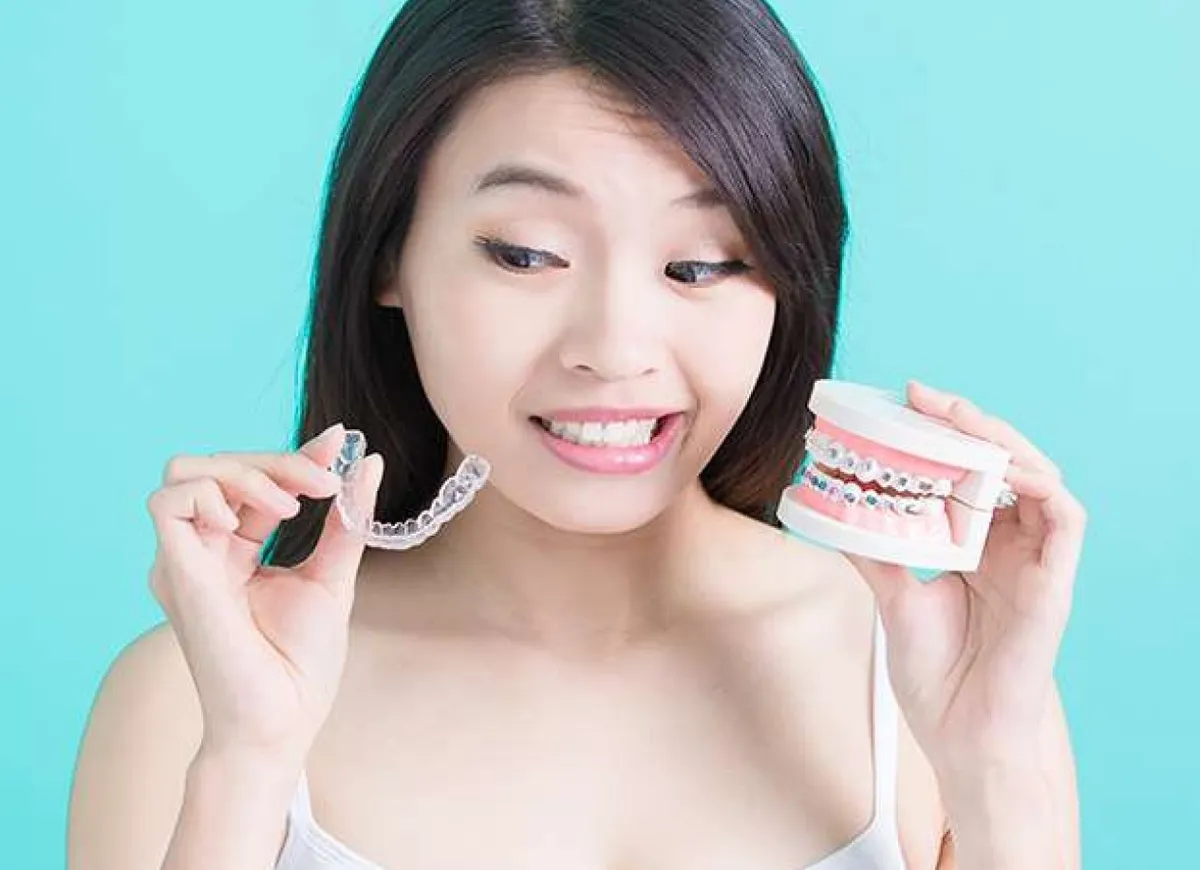
Invisalign uses a series of clear, removable aligners that are custom-made to gradually move your teeth.
Each aligner is designed to make small changes in tooth position. As you progress through the series, the aligners are changed according to your treatment plan.
Because the trays are transparent and closely fit the teeth, Invisalign can provide a more discreet alternative to conventional braces.
The aligners can also be removed for eating, brushing, and flossing.
What Are Traditional Braces?
Traditional braces use brackets attached to the teeth and orthodontic wires to apply controlled forces.
The wires connect the brackets and are periodically adjusted to guide the teeth toward their planned positions.
Modern braces are generally smaller and more streamlined than older designs, but the brackets and wires remain visible.
Traditional braces have been used for decades and can address a wide range of alignment and bite problems.
Invisalign vs. Braces: The Main Differences
Although both treatments work toward tooth alignment, several practical differences can influence which option is appropriate.
Appearance
One of Invisalign’s most noticeable advantages is its appearance.
The aligners are clear, making them considerably less noticeable than metal brackets and wires. This can be appealing to adults and teenagers who prefer a discreet treatment option.
Traditional braces are more visible, although tooth-colored or ceramic orthodontic options may provide a less noticeable alternative in some cases.
Removability
Invisalign aligners are removable.
This means you can take them out when eating and drinking most beverages, allowing you to continue enjoying a relatively normal diet.
Traditional braces remain attached to the teeth throughout treatment. Certain hard, sticky, or chewy foods may need to be avoided to reduce the risk of damaging brackets or wires.
Oral Hygiene
Removability can also make oral hygiene more straightforward with Invisalign.
You can remove the aligners and brush and floss your teeth normally. However, you still need to clean the aligners and wear them according to your treatment plan.
With traditional braces, brushing and flossing around brackets and wires requires more attention. Food particles and plaque can become trapped around orthodontic components, making thorough cleaning particularly important.
Regardless of the treatment chosen, maintaining excellent oral hygiene is essential.
Which Is More Comfortable?
Both Invisalign and braces can cause temporary discomfort as the teeth respond to orthodontic forces.
With Invisalign, patients may experience pressure or tenderness when starting a new aligner.
Traditional braces can also cause soreness following adjustments, and brackets or wires may occasionally irritate the cheeks, lips, or tongue.
Comfort varies from patient to patient. Neither treatment should be expected to be completely sensation-free.
Can Invisalign Treat the Same Problems as Braces?
This is one of the most important questions to discuss with your dental professional.
Invisalign can effectively treat many common orthodontic concerns, including certain cases of:
- Crowded teeth
- Spacing between teeth
- Mild to moderate alignment problems
- Certain bite issues
However, not every orthodontic case is suitable for clear aligners.
The complexity of the tooth movement required, the patient’s bite, tooth position, treatment goals, and ability to consistently wear the aligners all influence candidacy.
Traditional braces can provide orthodontic professionals with highly controlled tooth movement and remain an important treatment option for more complex cases.
A clinical evaluation is therefore more useful than choosing based solely on appearance or convenience.
The Importance of Patient Compliance
One of the biggest differences between Invisalign and traditional braces is the level of responsibility placed on the patient.
Because Invisalign aligners are removable, patients must remember to wear them according to their prescribed treatment plan.
Taking the aligners out too frequently or not wearing them consistently can interfere with the planned tooth movements.
Traditional braces, on the other hand, remain attached to the teeth. Patients still need to follow dietary and oral hygiene instructions, but they cannot simply remove the orthodontic appliance when they do not feel like wearing it.
For patients who are highly consistent and responsible with their treatment, Invisalign can be a convenient option. For others, fixed braces may provide a more reliable approach.
What Is the Invisalign Treatment Process Like?
The process begins with an orthodontic evaluation.
Your dentist or orthodontic provider examines your teeth, bite, gums, and overall oral health. Digital scans, photographs, X-rays, or other diagnostic records may be used to develop a treatment plan.
If Invisalign is appropriate, a series of custom aligners is created based on the planned tooth movements.
You wear each aligner according to your provider’s instructions before progressing to the next stage.
Throughout treatment, periodic appointments allow your dental team to monitor progress and determine whether your teeth are moving as expected.
What Is the Traditional Braces Process Like?
Traditional braces also begin with a comprehensive examination and treatment plan.
Brackets are attached to the teeth, and an orthodontic wire is placed through them.
During subsequent appointments, the orthodontic system may be adjusted to continue applying controlled forces.
As treatment progresses, your provider monitors tooth movement, bite changes, and oral health.
Once the teeth reach their planned positions, the braces are removed and a retainer is typically prescribed.
What Happens After Invisalign or Braces?
Orthodontic treatment does not end when the teeth reach their desired positions.
Teeth naturally have a tendency to shift over time. This is why retention is an essential part of orthodontic treatment.
Your provider may recommend a removable or fixed retainer depending on your individual circumstances.
Wearing your retainer as instructed helps maintain the alignment achieved during treatment.
Invisalign or Braces: Which Is Better for Adults?
Adults often consider Invisalign because of its discreet appearance and removable design.
For someone who works in a professional environment, regularly attends meetings, or simply prefers not to have visible brackets, clear aligners can be an attractive option.
However, convenience should not be the only consideration.
An adult patient with a complex bite problem may still benefit from traditional braces or another orthodontic approach.
The right choice is ultimately based on clinical suitability, not just aesthetics.
Invisalign or Braces: Which Is Better for Teenagers?
Both options may be appropriate for teenagers.
Invisalign can offer greater flexibility around meals and oral hygiene, but teenagers must be able to take responsibility for wearing and caring for their aligners.
Traditional braces may be preferable when consistent compliance with removable appliances is a concern or when the orthodontic problem requires treatment that is better managed with fixed appliances.
A professional evaluation can help determine which option fits the patient’s needs.
How Do You Choose the Right Orthodontic Treatment?
When comparing Invisalign and traditional braces, consider these questions:
1. What type of orthodontic problem do I have?
The complexity and type of tooth movement required should be the first consideration.
2. How important is appearance during treatment?
If you want a discreet treatment option, clear aligners may be attractive.
3. Can I consistently follow instructions?
Invisalign requires patients to be disciplined about wearing and caring for their aligners.
4. Do I want to remove my appliance when eating?
Invisalign provides this flexibility, while traditional braces remain fixed.
5. How comfortable am I with cleaning around orthodontic appliances?
Both options require good oral hygiene, but the cleaning process differs.
6. What does my dental professional recommend?
Your dentist or orthodontic provider can determine which treatment is appropriate after evaluating your teeth and bite.
Why a Professional Orthodontic Evaluation Matters
It can be tempting to select an orthodontic treatment based on advertisements, social media, or what worked for someone you know.
However, orthodontic treatment is not one-size-fits-all.
Two patients can have teeth that appear similarly crowded but require very different treatment strategies because of differences in jaw structure, bite, tooth roots, bone, or other factors.
A professional evaluation helps identify the underlying orthodontic problem and determine which treatment can address it safely and predictably.
Invisalign and Orthodontic Treatment in National City, CA
If you are considering Invisalign or traditional orthodontic treatment, Crown Dental Group provides orthodontic and comprehensive dental care for patients in National City and surrounding South Bay communities.
Our orthodontic services include Invisalign and traditional orthodontics, allowing treatment options to be considered based on each patient’s dental needs and goals.
Our office also uses modern dental technology, including digital impressions, digital radiography, and CBCT imaging when clinically appropriate. These technologies can assist with diagnosis and treatment planning.
Crown Dental Group serves patients from National City, Chula Vista, Bonita, Imperial Beach, and nearby South Bay communities.
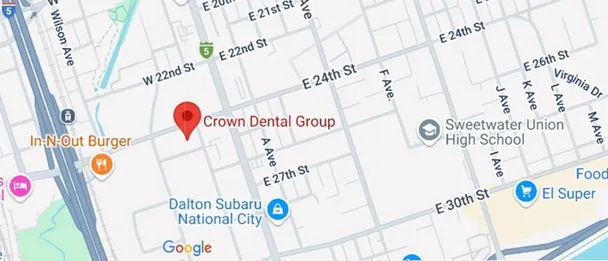
Located at 2405 Transportation Ave, National City, CA 91950, our office is conveniently situated near the National City Mile of Cars and the surrounding South Bay area.
If you are unhappy with your tooth alignment or concerned about your bite, an orthodontic evaluation can help you understand your options before committing to treatment.
- Crown Dental Group
- 2405 Transportation Ave
- National City, CA 91950
- Phone: (619) 474-6200
- Email: info@crowndentalnc.com
Frequently Asked Questions About Invisalign and Braces
1. Is Invisalign better than traditional braces?
Neither treatment is universally better. Invisalign can provide a discreet, removable option for appropriate cases, while traditional braces can effectively address a broad range of orthodontic problems. The right choice depends on your individual needs.
2. Is Invisalign painful?
You may experience temporary pressure or soreness when beginning a new aligner because the appliance is applying controlled forces to move the teeth. Significant or persistent pain should be discussed with your dental provider.
3. Can I eat normally with Invisalign?
Because Invisalign aligners are removable, you can generally remove them when eating. You should follow your provider’s instructions regarding what you can drink while wearing the aligners and how to clean them.
4. Can I eat normally with braces?
Traditional braces remain attached to the teeth, so certain hard, sticky, or chewy foods may need to be avoided to protect the brackets and wires.
5. How long does Invisalign treatment take?
Treatment time varies significantly depending on the complexity of the case and how consistently the patient follows the treatment plan. Your provider can give you a more individualized estimate after an examination.
6. Can adults get Invisalign?
Yes. Invisalign can be an orthodontic option for many adults, provided their teeth and bite are suitable for clear-aligner treatment.
7. Do I need a retainer after Invisalign or braces?
In most cases, some form of retention is recommended after orthodontic treatment. Retainers help maintain the alignment achieved during active treatment.
8. How do I know whether Invisalign or braces are right for me?
The best way to determine your options is through a professional orthodontic evaluation. Your dentist or orthodontic provider can assess your teeth, bite, oral health, and treatment goals before recommending an appropriate approach.
Find us here