How Modern Dental Technology Makes Treatment Faster, Safer, and More Comfortable
Discover how advanced dental technology like CBCT, digital radiography, and digital impressions improve accuracy, comfort, and treatment outcomes in modern dentistry.
For many patients, dental anxiety is tied to outdated memories — long appointments, uncomfortable impressions, uncertainty during diagnosis, and waiting days for treatment plans. Modern dentistry has changed that experience dramatically.
Today, advanced technology allows dental professionals to diagnose conditions earlier, plan treatment more precisely, and improve patient comfort at every stage. At Crown Dental Group, technology is not simply an upgrade — it is a core part of how we deliver safer, faster, and more predictable care.
Why Technology Matters in Dentistry
Dental treatment relies on precision. A minor issue hidden beneath the gums or between teeth can determine whether a patient needs preventive care, restorative treatment, or immediate intervention. Modern tools allow dentists to see what cannot be detected during a visual exam alone, supporting earlier decisions and more accurate treatment.
Digital Radiography Improves Early Detection
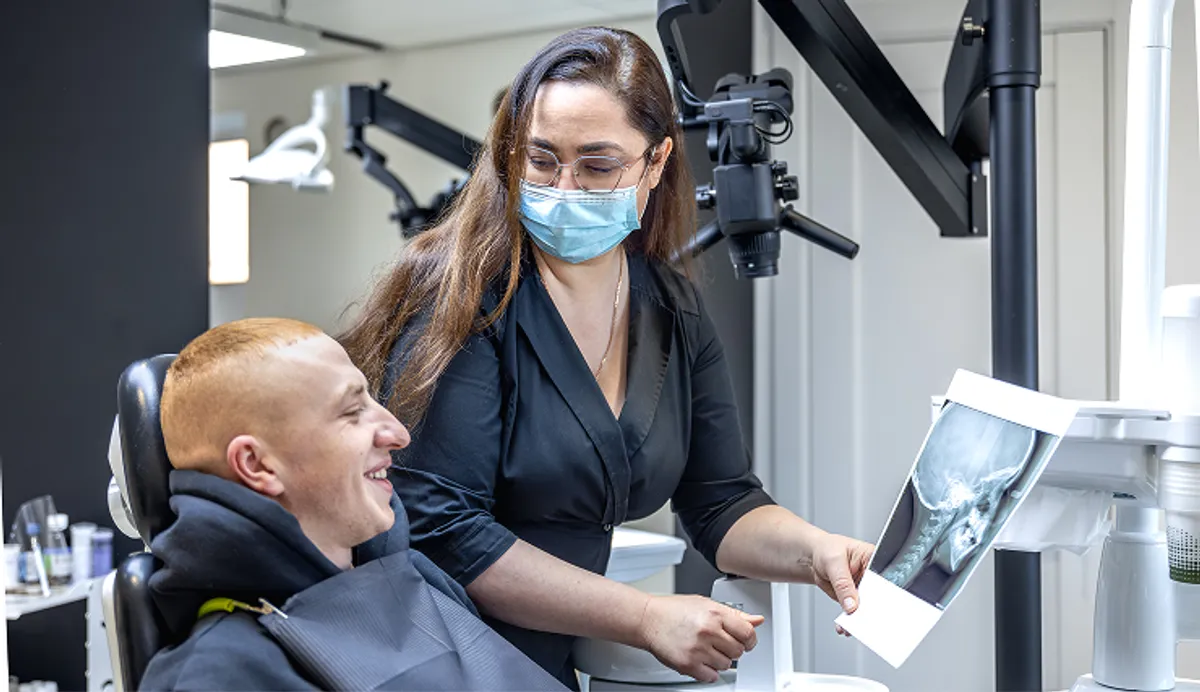
Traditional X-rays have long been part of dentistry, but Digital Radiography offers significant improvements. Images appear instantly, allowing patients to review findings during the appointment rather than waiting for film processing.
Digital imaging allows dentists to detect:
- Early cavities between teeth
- Bone loss related to gum disease
- Hidden infections near roots
- Fractures below the surface
- Impacted teeth
- Failing restorations
Another key advantage is reduced radiation exposure compared to traditional systems, making digital radiography safer for regular preventive care.
Why CBCT Changes Complex Dental Planning
CBCT (Cone Beam Computed Tomography) provides three-dimensional imaging of the mouth, jaw, bone structure, and surrounding tissues. Unlike standard two-dimensional X-rays, CBCT reveals depth, positioning, and anatomical relationships essential for advanced treatment planning.
This is especially valuable for:
- Implant Dentistry — where millimeter-level accuracy determines long-term success
- Root Canal planning — to identify exact canal anatomy
- Surgical Extractions — to map root positions and avoid nerves
- Orthodontic evaluation — to assess root depth and bone support
- Jaw assessment for TMJ concerns
Better Implant Success Through Precise Imaging
Implant Dentistry depends heavily on understanding bone structure before treatment. CBCT helps answer critical pre-surgical questions:
- Is there sufficient bone volume for implant placement?
- Where are major nerves located?
- Is bone grafting necessary before placement?
- What implant size and angulation fit best?
This technology reduces complications and improves long-term implant stability significantly.
Digital Impressions Replace Traditional Molds
Many patients remember impression trays filled with material that felt bulky and uncomfortable. Digital Impressions eliminate that experience entirely. Using scanning technology, dentists capture highly detailed images of teeth and gums without traditional trays.
Benefits include:
- Improved comfort with no gagging
- Faster image capture
- Higher accuracy
- Easier communication with dental labs
- Faster appliance creation
This is especially useful for Crowns, Veneers, Invisalign, Night Guards, and Sports Mouthguards.
Faster Restorative Dentistry Starts With Better Data
Accurate digital scans improve restorative work because Crowns, Dental Bridges, and other restorations fit more precisely from the first try. Poorly fitting restorations often lead to bite discomfort, sensitivity, excessive adjustment appointments, and premature wear. Digital workflows reduce all of these problems.
Technology Improves Emergency Dentistry Too
Emergency visits often require immediate answers. When a patient arrives with severe pain, swelling, or trauma, digital imaging helps determine whether the issue involves infection, fracture, nerve involvement, or bone damage — speeding up treatment decisions for Root Canals, Extractions, and temporary stabilization.
Orthodontic Planning Is More Predictable
For Invisalign and traditional Orthodontics, digital imaging helps visualize tooth movement before treatment begins. Patients benefit because they can understand expected movement, treatment stages, and timeline expectations before committing to care.
Gum Disease Monitoring Is More Accurate
Periodontal Treatment also benefits from imaging technology because bone loss often progresses without visible symptoms. Digital images allow dentists to monitor changes over time and adjust treatment protocols as gum health evolves.
Caring for Your Smile, One Visit at a Time
Advanced dentistry is not only about machines it is about giving patients better care through precision and comfort.
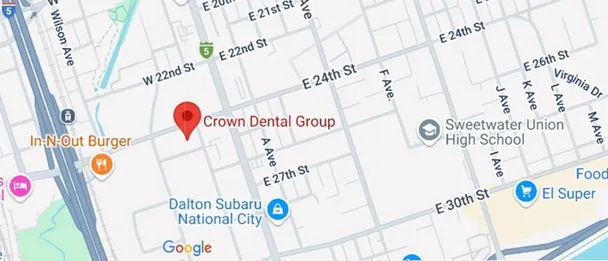
Find us here