How Modern Dental Technology Improves Accuracy, Comfort, and Results
Discover how modern dental technology improves diagnostic accuracy, patient comfort, and treatment outcomes for healthier smiles and better dental experiences.
Dentistry Has Changed More Than Most People Realize
For many adults, their perception of dentistry is based on experiences from years—or even decades—ago. They may remember uncomfortable impression materials, lengthy procedures, limited imaging technology, or uncertainty about treatment recommendations.
However, modern dentistry has undergone a remarkable transformation.
Today’s dental technology allows dentists to diagnose problems earlier, plan treatments more accurately, and provide a significantly more comfortable experience for patients. What once required multiple appointments can often be completed more efficiently. Conditions that were difficult to detect in the past can now be identified long before symptoms appear.
At Crown Dental Group, technology plays an important role in delivering high-quality care. From digital imaging to advanced diagnostic tools, modern dental innovations help improve every stage of the patient experience.
The result is better accuracy, greater comfort, and more predictable treatment outcomes.
Why Technology Matters in Dentistry
Dentistry combines science, medicine, engineering, and artistry.
Every diagnosis and treatment decision depends on accurate information.
The more precisely a dentist can evaluate your oral health, the more effective treatment becomes.
Modern dental technology helps:
- Improve diagnostics
- Increase treatment precision
- Enhance patient comfort
- Reduce treatment time
- Improve communication
- Support long-term success
Technology does not replace the expertise of a skilled dentist. Instead, it provides valuable tools that help dental professionals make more informed decisions.
The Evolution of Dental Care
Years ago, dentists relied heavily on visual examinations and traditional X-rays.
While these methods were useful, they had limitations.
Some conditions were difficult to detect until they became more advanced.
Today, advanced imaging and digital technologies provide significantly more information.
Dentists can now:
- View structures in greater detail
- Detect problems earlier
- Plan treatment more accurately
- Monitor oral health more effectively
These advancements benefit both patients and providers.
Digital Radiography: A Better Way to See Oral Health
Digital radiography has become one of the most important tools in modern dentistry.
Unlike traditional film X-rays, digital systems capture images electronically.
Benefits of Digital Radiography
Digital radiographs offer several advantages.
These include:
- Immediate image availability
- Enhanced image quality
- Improved diagnostic capabilities
- Easy image storage and retrieval
- Reduced need for retakes
Dentists can enlarge images, adjust contrast, and examine areas more closely than was possible with traditional film.
This helps identify problems that might otherwise go unnoticed.
Earlier Detection Means Better Outcomes
Digital imaging can help detect:
- Cavities
- Bone loss
- Infections
- Impacted teeth
- Failing restorations
Earlier diagnosis often leads to simpler and less invasive treatment options.
CBCT Technology: Seeing Beyond Traditional X-Rays
One of the most significant advancements in dentistry is Cone Beam Computed Tomography, commonly known as CBCT.
CBCT technology produces highly detailed three-dimensional images of oral structures.
Unlike standard X-rays, CBCT scans provide comprehensive views of:
- Teeth
- Bone
- Nerves
- Sinuses
- Jaw structures
Why Three-Dimensional Imaging Matters
Traditional X-rays produce two-dimensional images.
While valuable, they cannot always provide complete information.
CBCT allows dentists to examine structures from multiple angles and perspectives.
This level of detail improves treatment planning and diagnostic accuracy.
Applications of CBCT Imaging
CBCT technology is especially useful for:
- Dental implants
- Root canal therapy
- Oral surgery
- Impacted teeth
- Complex diagnoses
Three-dimensional imaging helps dentists identify anatomical structures with exceptional precision.
Digital Impressions: Goodbye to Traditional Molds
For many patients, traditional dental impressions were one of the least enjoyable parts of treatment.
Conventional impressions often required:
- Bulky trays
- Thick impression materials
- Extended waiting times
- Potential gagging discomfort
Modern digital impression systems have transformed this experience.
How Digital Impressions Work
Using advanced intraoral scanners, dentists can create highly accurate digital models of the teeth and gums.
The scanner captures thousands of images and combines them into a detailed three-dimensional representation.
Benefits for Patients
Digital impressions provide:
- Greater comfort
- Improved accuracy
- Faster procedures
- Enhanced treatment planning
Many patients find digital scanning significantly more comfortable than traditional impressions.
Improved Accuracy in Restorative Dentistry
Precision is critical when creating dental restorations.
Crowns, bridges, veneers, and implant restorations must fit accurately to function properly and feel comfortable.
Digital technologies help reduce inaccuracies that may occur with traditional methods.
This improves:
- Fit
- Comfort
- Longevity
- Appearance
Patients benefit from restorations that feel more natural and require fewer adjustments.
Better Treatment Planning for Dental Implants
Dental implant placement requires careful planning.
Implants must be positioned precisely to ensure:
- Proper function
- Long-term stability
- Optimal aesthetics
Advanced imaging technology allows dentists to evaluate:
- Bone volume
- Bone density
- Nerve locations
- Sinus anatomy
This information helps create safer and more predictable treatment plans.
Enhanced Diagnosis of Hidden Problems
Some dental problems develop beneath the surface.
Patients may not notice symptoms until significant damage has occurred.
Advanced diagnostic technology helps identify issues such as:
- Hidden decay
- Bone loss
- Cracks
- Infections
- Root abnormalities
Finding these problems early often allows for more conservative treatment.
Improving Patient Education
One of the most valuable benefits of modern technology is improved communication.
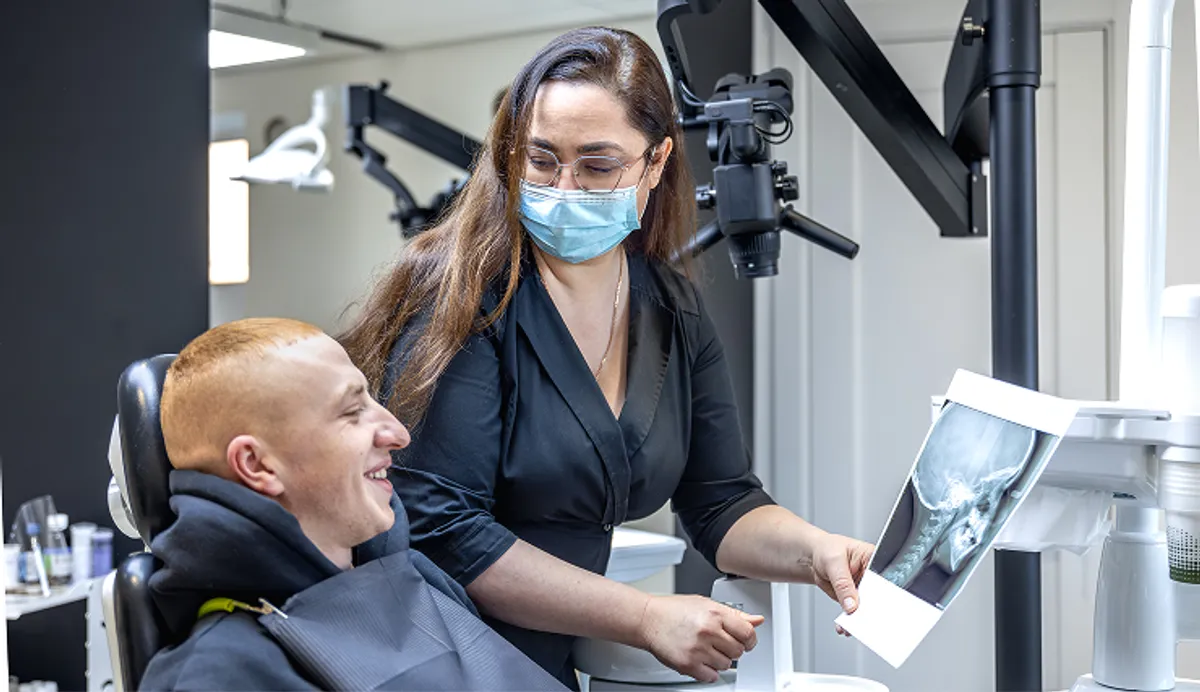
Many patients find it easier to understand treatment recommendations when they can see what the dentist sees.
Digital images allow providers to:
- Show areas of concern
- Explain diagnoses visually
- Discuss treatment options
- Track changes over time
Visual information often increases patient confidence and understanding.
Increased Comfort During Dental Visits
Technology has contributed significantly to patient comfort.
Many modern procedures are:
- Faster
- More efficient
- Less invasive
- More predictable
This can help reduce anxiety and improve the overall patient experience.
Patients who previously avoided dental care may be surprised by how much has changed.
Supporting Cosmetic Dentistry
Modern cosmetic dentistry depends heavily on technology.
Advanced imaging and digital planning allow dentists to evaluate:
- Tooth proportions
- Smile symmetry
- Facial aesthetics
- Treatment outcomes
This information helps create natural-looking and personalized results.
Smile Design and Planning
Digital tools allow providers to carefully plan cosmetic treatments before work begins.
Patients often gain a better understanding of what to expect and how treatment can improve their smiles.
The Role of Technology in Orthodontics
Orthodontic treatment has evolved significantly.
Modern digital systems help plan tooth movement with exceptional precision.
This improves:
- Predictability
- Efficiency
- Patient communication
Digital technology allows providers to evaluate alignment issues and create customized treatment plans.
Faster and More Efficient Workflows
Technology helps streamline many aspects of dental care.
Benefits may include:
- Shorter appointments
- Faster diagnoses
- Improved communication with dental laboratories
- Enhanced record management
These efficiencies help create a smoother experience for patients.
Better Long-Term Monitoring
Oral health changes over time.
Digital records allow dentists to compare images from previous visits and identify trends.
This can help monitor:
- Gum recession
- Bone loss
- Tooth wear
- Restorative integrity
Tracking changes over time supports preventive care and early intervention.
Technology and Preventive Dentistry
One of the greatest advantages of modern dental technology is its contribution to prevention.
Earlier detection means:
- Smaller cavities
- Less invasive treatment
- Better preservation of natural teeth
- Reduced treatment costs
Preventive care remains the foundation of long-term oral health.
Technology helps make prevention more effective.
The Human Element Still Matters
While technology provides valuable tools, successful dentistry still depends on human expertise.
Advanced equipment is most effective when combined with:
- Clinical experience
- Professional judgment
- Patient communication
- Personalized care
Technology supports dental professionals, but relationships and trust remain at the heart of exceptional care.
Frequently Asked Questions
What is digital radiography?
Digital radiography uses electronic sensors to capture detailed dental images instead of traditional film.
Is CBCT imaging safe?
CBCT technology is widely used in dentistry and provides valuable diagnostic information for many procedures.
Are digital impressions more accurate?
Digital scanning often provides highly precise models that improve treatment planning and restoration fit.
Does modern technology make dental visits more comfortable?
Yes. Many technologies reduce discomfort, improve efficiency, and enhance the patient experience.
Why is early diagnosis important?
Early diagnosis often allows for simpler and less invasive treatment options.
How does technology help with dental implants?
Advanced imaging allows dentists to evaluate bone structure and plan implant placement more accurately.
Can technology improve cosmetic dentistry results?
Yes. Digital planning helps create personalized and predictable cosmetic outcomes.
Does technology replace the dentist?
No. Technology provides valuable information, but professional expertise remains essential for diagnosis and treatment.
The Future of Dentistry Is Already Here
Modern dental technology has transformed the way oral healthcare is delivered. From digital radiography and CBCT imaging to digital impressions and advanced treatment planning, today’s innovations help improve accuracy, comfort, efficiency, and long-term outcomes.
For patients, this means a better dental experience. Problems can be identified earlier, treatments can be planned more precisely, and care can often be delivered more comfortably than ever before.
At Crown Dental Group, we are committed to combining advanced technology with personalized care to help patients achieve healthier smiles and better oral health. While technology continues to evolve, our goal remains the same: providing exceptional dentistry that supports comfort, confidence, and long-term wellness.
Modern dentistry isn’t just about treating problems—it’s about delivering smarter, more effective care every step of the way.
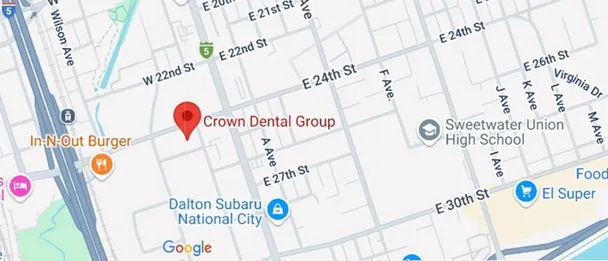
Find us here