How Do Dentists Match Artificial Teeth to Natural Teeth? Understanding Dental Shade Selection
Discover how dentists match crowns, bridges, and dentures to natural teeth using shade guides, lighting, translucency, and dental materials.
Have you ever wondered how a dental crown or replacement tooth can look so similar to the natural teeth around it? Creating a natural-looking dental restoration involves more than choosing a color that appears close to the surrounding teeth.
Dentists consider several factors, including the shade, brightness, translucency, surface characteristics, and shape of the existing teeth. These details help determine how a restoration will look under different lighting conditions and how well it will blend with the rest of the smile.
This process is known as dental shade selection or shade matching. It plays an important role in restorative dentistry, particularly when creating crowns, bridges, dentures, and other tooth-colored restorations.
Understanding how dentists select dental shades can help patients appreciate the planning and precision involved in creating a natural-looking restoration.
What Is Dental Shade Matching?
Dental shade matching is the process of selecting a color for an artificial tooth or restoration that complements the patient’s natural teeth.
It is commonly performed when creating restorations such as:
- Dental crowns
- Dental bridges
- Partial dentures
- Complete dentures
- Porcelain or ceramic restorations
- Other tooth-colored dental appliances
The goal is to achieve a result that looks appropriate within the patient’s smile.
However, natural teeth are not a single, uniform color. Their appearance can vary from the gumline to the biting edge, and neighboring teeth may have subtle differences in color and translucency.
For this reason, dentists evaluate more than the overall shade when planning a restoration.
How Do Dentists Determine the Right Tooth Color?
Dentists use several methods to assess the color of natural teeth and select a suitable restoration shade.
1. Using a Dental Shade Guide
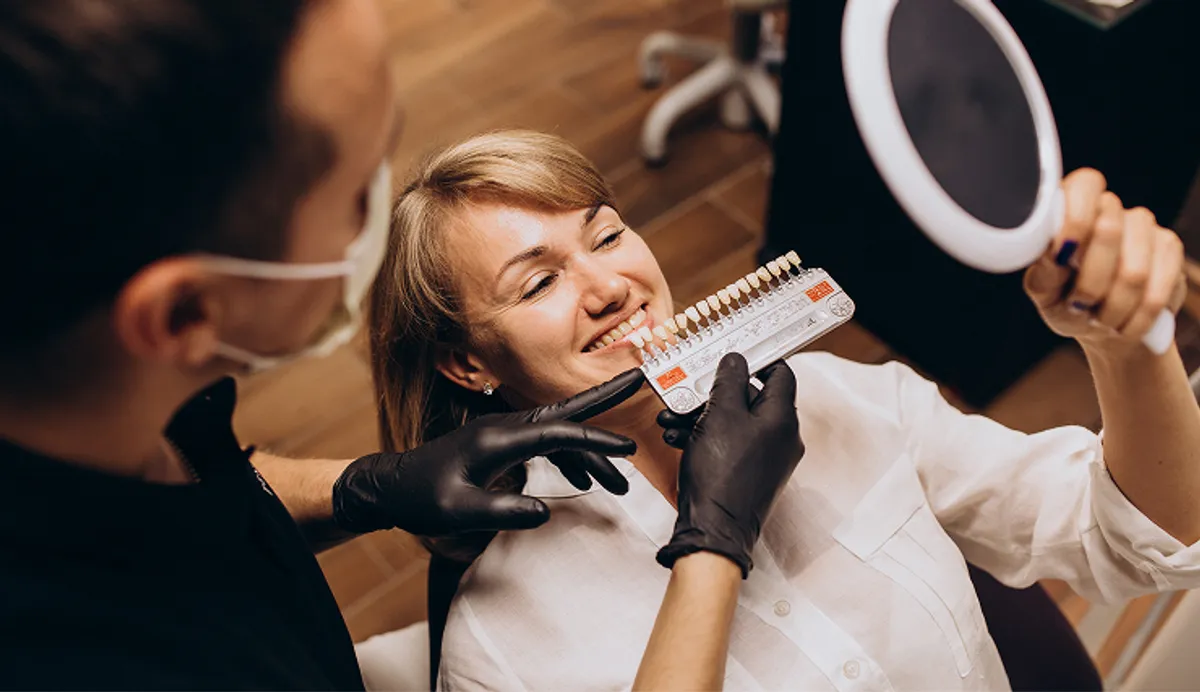
A dental shade guide is a collection of standardized tooth-colored samples used to compare the appearance of natural teeth with available restorative shades.
The dentist holds the samples near the patient’s teeth and evaluates which option provides the closest visual match.
Shade guides help create a consistent reference when communicating color selections with dental laboratories.
However, the final result also depends on the material used and the way light interacts with the restoration.
2. Evaluating Tooth Brightness
Tooth color is not determined by hue alone. Brightness, also called value, is another important consideration.
Two teeth may have similar color tones but appear different because one is lighter or darker than the other.
A restoration that is significantly brighter than the surrounding teeth may look artificial, even if its general color appears correct.
Dentists consider the brightness of neighboring teeth to help select a shade that fits naturally into the smile.
3. Examining Color Variations Across the Tooth
Natural teeth often have subtle color variations.
The area near the gumline may appear darker or more saturated, while the middle portion may have a different shade. The biting edge may appear lighter or more translucent.
When selecting a restoration shade, the dentist may evaluate different sections of the natural tooth rather than relying on one overall color.
This is particularly important for visible restorations, where small differences may be easier to notice.
4. Assessing Translucency
Translucency refers to how much light passes through a material.
Natural enamel has translucent qualities, particularly near the edges of the front teeth. This contributes to the depth and variation seen in a natural smile.
Some restorative materials can reproduce these characteristics more closely than others.
The dentist considers translucency when choosing a material and shade, especially when restoring teeth that are visible when speaking or smiling.
5. Considering Surface Texture
Natural teeth have surface characteristics that affect how light reflects from them.
Some teeth have subtle ridges, grooves, and variations in texture. A restoration with a noticeably different surface finish may reflect light differently from the surrounding teeth.
For this reason, shade selection is only one part of creating a natural-looking restoration. Shape and surface characteristics also matter.
Why Does Lighting Matter During Dental Shade Selection?
Lighting can significantly influence how tooth color appears.
A tooth may look different under natural daylight, indoor lighting, or dental operatory lights. This can make shade selection more complicated than simply comparing two colors in one setting.
Dentists consider lighting conditions when evaluating natural teeth and selecting restoration shades.
Natural Daylight
Natural daylight provides a useful reference because it can reveal subtle color differences that may be less noticeable under some indoor lighting conditions.
Dental Operatory Lighting
Dental treatment rooms use specialized lighting to help dentists examine the mouth. However, the color temperature and intensity of artificial light can influence how shades appear.
Avoiding Color Distortion
Strong lighting, surrounding colors, and prolonged visual comparison can affect how the eyes perceive tooth shades.
Dentists may use standardized shade guides and additional visual references to make the selection process more consistent.
In some cases, photographs or digital shade analysis may also be used to help communicate the selected shade to the dental laboratory.
What Factors Can Affect the Natural Color of Your Teeth?
Before choosing a restoration shade, dentists consider the existing color of the patient’s teeth.
Natural tooth color varies from person to person. Several factors can influence how teeth appear.
Genetics
Genetic factors influence the natural characteristics of enamel and dentin, which contribute to tooth color and translucency.
This is one reason why people naturally have different tooth shades, even when they maintain similar oral hygiene habits.
Aging
Teeth may become darker or more yellow with age. Changes in the underlying dentin and the condition of the enamel can influence their appearance over time.
Food and Beverages
Coffee, tea, red wine, and certain foods can contribute to surface staining.
These stains may affect the appearance of natural teeth and should be considered when selecting a restoration shade.
Tobacco Use
Tobacco products can contribute to discoloration and staining on tooth surfaces.
Previous Dental Treatments
Previous restorations, dental trauma, and certain dental procedures can influence the color of individual teeth.
For example, a tooth that has undergone root canal treatment may appear different from its neighboring teeth in some cases.
Identifying these variations helps the dentist determine how to approach shade selection.
Do Different Dental Materials Affect the Final Tooth Color?
Yes. The material used to create a dental restoration influences how its color appears.
Even when two restorations are assigned the same shade, they may look different depending on their composition, thickness, and optical properties.
Porcelain and Ceramic
Porcelain and ceramic materials are commonly used for tooth-colored restorations because they can reproduce several visual characteristics of natural teeth.
Depending on the specific material, they can be designed with varying levels of translucency and shade variation.
They are often considered for visible restorations where appearance is an important factor.
Composite Resin
Composite resin is a tooth-colored material used in certain dental restorations.
It is available in different shades and can be selected to complement the surrounding tooth structure.
Its final appearance depends on the material, application technique, and condition of the tooth being restored.
Acrylic
Acrylic materials are commonly used in dentures. The artificial teeth and gum-colored base are selected to complement the patient’s remaining teeth and oral appearance.
The shade and design may differ depending on whether the denture is partial or complete.
Your dentist can explain which material is appropriate based on the location of the restoration, functional requirements, and aesthetic preferences.
Can You Choose a Whiter Shade for Your Dental Crown or Denture?
Patients can discuss their preferred tooth shade with their dentist, but the final selection should consider the appearance of the surrounding natural teeth.
Choosing a shade that is significantly whiter than the existing teeth may cause the restoration to stand out.
If you are planning to whiten your natural teeth, it is important to discuss this before having permanent restorations made.
Dental crowns, bridges, and dentures do not respond to traditional tooth-whitening treatments in the same way natural teeth do. Their color generally needs to be changed by replacing or modifying the restoration.
For patients considering both whitening and restorative treatment, the dentist may recommend completing the whitening process first and allowing the shade to stabilize before selecting the final restoration color.
This helps reduce the likelihood of a mismatch between the restoration and the natural teeth.
What Happens During the Dental Shade-Matching Process?
The exact process depends on the type of restoration being made, but shade selection generally takes place during treatment planning or the preparation stage.
Step 1: Examining the Natural Teeth
The dentist evaluates the color of the surrounding teeth, paying attention to the areas that will be visible when smiling or speaking.
The condition of the existing teeth and any discoloration are also considered.
Step 2: Selecting a Preliminary Shade
A dental shade guide is used to compare available colors with the patient’s natural teeth.
The dentist may consider several shade characteristics, including brightness, hue, and saturation.
Step 3: Evaluating the Material
The dentist determines which restorative material is appropriate for the treatment.
Different materials have different optical properties, so the same shade selection may not produce identical results across all materials.
Step 4: Recording and Communicating the Shade
The selected shade is documented and communicated to the dental laboratory when laboratory fabrication is required.
Photographs and additional notes may be used to provide more information about the natural teeth.
Step 5: Checking the Final Restoration
When the restoration is ready, the dentist checks its appearance, fit, and function.
Depending on the treatment, adjustments or further laboratory refinements may be considered before the restoration is finalized.
What If Your Dental Crown Does Not Match Your Natural Teeth?
A dental restoration that appears noticeably different from neighboring teeth may need further evaluation.
However, a perceived color mismatch can have several causes. Lighting, material thickness, surrounding tooth discoloration, and the optical properties of the restoration may all influence its appearance.
If your crown, bridge, or denture looks different from what you expected, discuss your concerns with your dentist.
Depending on the situation, possible next steps may include:
- Reviewing the original shade selection.
- Checking the restoration under different lighting conditions.
- Evaluating whether the material affects the final appearance.
- Discussing possible refinements or replacement when appropriate.
It is important to address these concerns before the final restoration is permanently placed whenever possible.
Why Professional Shade Selection Matters
A natural-looking restoration requires coordination between clinical assessment, material selection, and precise fabrication.
A shade that looks appropriate on a guide may appear different once incorporated into a finished restoration. This is why dentists consider the surrounding teeth, lighting, material properties, and individual patient preferences throughout the process.
Professional shade selection helps ensure that the restoration is not only functional but also appropriate for the overall appearance of the smile.
Discuss Your Restorative Dental Options at Crown Dental Group
Dental restorations should be planned with both function and appearance in mind. Whether you need a crown, bridge, denture, or another restorative treatment, selecting an appropriate shade is an important part of the process.
At Crown Dental Group, patients can explore restorative dental options based on their individual needs. The dental team can evaluate your existing teeth, discuss suitable restorative materials, and help determine an appropriate treatment approach.
If you are considering a dental restoration and want to understand how its appearance will complement your natural teeth, schedule a consultation.
Crown Dental Group serves patients in National City and nearby communities, including Chula Vista, Bonita, and Imperial Beach.
Schedule an appointment to discuss your dental restoration options.
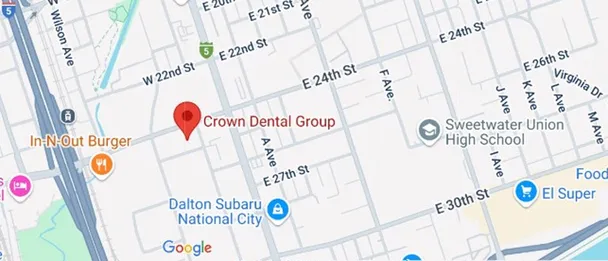
- Crown Dental Group
- 2405 Transportation Ave
- National City, CA 91950
- Phone: (619) 474-6200
- Email: info@crowndentalnc.com
Frequently Asked Questions About Dental Shade Matching
1. How do dentists choose the color of a dental crown?
Dentists use shade guides and visual assessments to compare the color of natural teeth with available restorative shades. They also consider brightness, translucency, surrounding teeth, and the material used to create the crown.
2. Can a dental crown look exactly like my natural teeth?
A crown can be designed to closely resemble natural teeth, but an exact match is not always possible. The final appearance depends on the restorative material, tooth characteristics, lighting, and fabrication process.
3. Why does my dental crown look different under certain lighting?
Different lighting conditions can change how colors appear. A restoration may look slightly different under natural daylight compared with indoor or dental operatory lighting because of differences in light intensity and color temperature.
4. Can I whiten my dental crown?
Traditional whitening products do not change the color of crowns. If you want a brighter smile, discuss your options with your dentist before undergoing whitening treatment or replacing existing restorations.
5. Should I whiten my teeth before getting a dental crown?
If you are planning to whiten your natural teeth, it is generally advisable to discuss this with your dentist before the final crown shade is selected. Whitening first may help establish a more suitable shade for the restoration.
6. Do dentures have to match my natural teeth?
Partial dentures are generally designed to complement the remaining natural teeth. Complete dentures require a separate shade selection based on the patient’s preferences and overall appearance.
7. Can a dental crown be made whiter after it is placed?
A completed crown cannot be whitened using conventional tooth-whitening products. If its appearance needs to change, your dentist must evaluate whether modification or replacement is appropriate.
8. How long does dental shade selection take?
The process may take only a few minutes for straightforward cases, but more detailed restorations can require additional assessment, photographs, or laboratory communication. The time depends on the complexity of the restoration and the level of detail required.
Find us here