Dental Bridges Explained: How They Replace Missing Teeth and Restore Your Smile
Discover how dental bridges replace missing teeth, the types available, how the procedure works, and how bridges restore function and your smile.
Losing a tooth can affect much more than the appearance of your smile. A missing tooth can make chewing more difficult, affect how you speak, and allow neighboring teeth to shift into the empty space. Over time, these changes can affect your bite and make maintaining your oral health more challenging.
Fortunately, a missing tooth does not necessarily mean you need to live with a gap. Dental bridges are a well-established restorative treatment designed to replace missing teeth and restore both function and appearance.
But how does a dental bridge work, and is it the right option for you?
What Is a Dental Bridge?
A dental bridge is a fixed dental restoration used to replace one or more missing teeth.
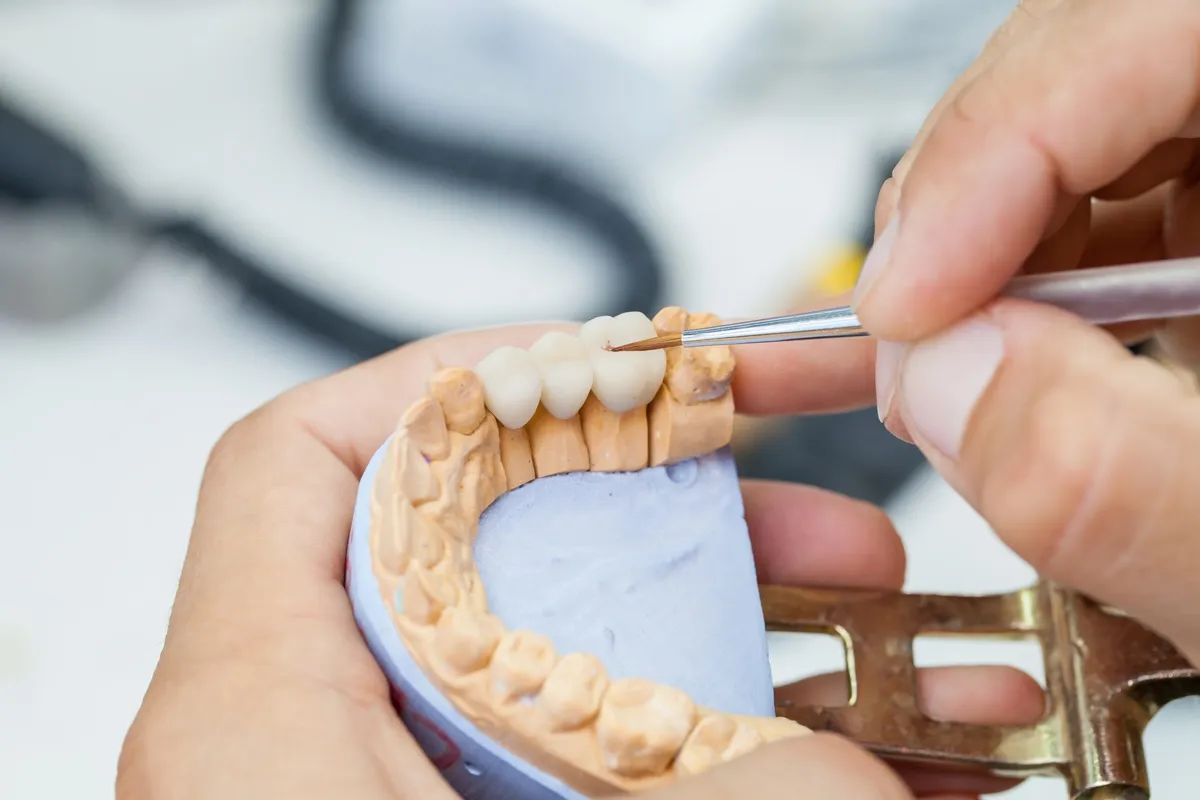
Unlike a removable denture, a traditional dental bridge is designed to remain in place. It typically consists of an artificial tooth, known as a pontic, supported by dental crowns or other attachments connected to the teeth or implants surrounding the gap.
The goal is to create a stable replacement that blends with your natural teeth while helping restore normal chewing and speaking.
Dental bridges can be made from several materials, including porcelain, ceramic, metal alloys, or combinations of these materials. The appropriate material depends on the location of the missing tooth, aesthetic requirements, bite forces, and your dentist’s recommendations.
Why Replace a Missing Tooth?
It can be tempting to ignore a missing tooth if it is not causing immediate pain. However, leaving a gap untreated can result in changes to your mouth over time.
Neighboring Teeth Can Shift
Teeth naturally respond to changes in their surroundings. When a tooth is missing, nearby teeth may gradually move toward the open space.
This shifting can affect your bite and make certain areas more difficult to clean.
Chewing Can Become More Difficult
A missing tooth reduces the number of surfaces available for chewing. Depending on which tooth is missing, you may unconsciously place more pressure on other teeth.
Your Bite Can Change
Your upper and lower teeth work together as a system. Losing a tooth can change how those teeth contact one another.
A dental bridge can help restore the missing contact point and support a more balanced bite.
Appearance and Confidence May Be Affected
Missing teeth can be particularly noticeable when they occur toward the front of the mouth. Replacing the tooth can restore the continuity of your smile and improve confidence when speaking or interacting with others.
How Does a Dental Bridge Work?
A traditional bridge generally uses the teeth on either side of the missing tooth as abutment teeth.
The supporting teeth are prepared to accommodate crowns, while the replacement tooth is connected between them. Once the bridge is permanently cemented, it spans the gap created by the missing tooth.
The bridge is custom-made to match your surrounding teeth in shape, size, and color.
This approach allows the replacement tooth to function as part of the dental arch without requiring you to remove the restoration each day.
Types of Dental Bridges
Not every missing tooth requires the same type of bridge. Your dentist will consider the location of the gap, the condition of surrounding teeth, your bite, and your overall oral health.
Traditional Dental Bridge
A traditional bridge is one of the most common types.
It uses a replacement tooth supported by crowns placed over the adjacent teeth. Traditional bridges can be an effective solution when the neighboring teeth are healthy enough to serve as supports.
Cantilever Bridge
A cantilever bridge is supported from one side rather than both sides of the missing tooth.
Because the design places different forces on the supporting tooth, it is not suitable for every location or situation. Your dentist will determine whether this option is appropriate based on your bite and the position of the missing tooth.
Maryland Bridge
A Maryland bridge uses a framework or wings that attach to the back surfaces of neighboring teeth rather than placing full crowns over them.
This can provide a more conservative option in selected cases, particularly for certain front teeth. However, the design may not be appropriate for areas exposed to heavy chewing forces.
Implant-Supported Bridge
An implant-supported bridge uses dental implants rather than relying entirely on natural teeth for support.
Dental implants are placed into the jawbone and can provide a stable foundation for the bridge. This option may be considered when multiple adjacent teeth are missing.
Whether implants are appropriate depends on factors such as bone volume, gum health, overall health, and the specific restoration required.
What Happens During a Dental Bridge Procedure?
Getting a dental bridge generally involves several stages.
Step 1: Dental Examination
Your dentist first evaluates the missing tooth area and surrounding teeth. X-rays or other imaging may be used to assess the roots, bone, and supporting structures.
Your dentist will also evaluate your bite and gum health.
Step 2: Preparing the Supporting Teeth
For a traditional bridge, the supporting teeth may need to be reshaped to accommodate the crowns.
The amount of preparation depends on the specific restoration and the condition of the teeth.
Step 3: Taking Digital Impressions
An impression of your teeth is needed to create a restoration that fits accurately.
Modern dental offices may use digital impressions, which capture detailed information about the teeth and surrounding structures without relying exclusively on traditional impression materials.
Step 4: Creating the Bridge
The bridge is fabricated to fit your mouth and coordinate with your surrounding teeth.
Your dentist will consider factors such as tooth shape, color, bite, and spacing when designing the restoration.
Step 5: Fitting and Placement
Once the bridge is ready, your dentist checks the fit and bites carefully. After any necessary adjustments, the bridge can be permanently secured according to the treatment plan. The result is a fixed restoration designed to look and function naturally.
What Does a Dental Bridge Feel Like?
It is normal for a new bridge to feel different at first. Your tongue may notice the replacement tooth, and your bite may feel slightly unfamiliar. Most patients gradually adapt as they become accustomed to the restoration.
Your dentist may recommend avoiding particularly hard or sticky foods immediately after placement, depending on the type of bridge and cement used.
If your bite feels uneven or uncomfortable after the adjustment period, contact your dental office. A simple adjustment may be needed.
How Do You Care for a Dental Bridge?
A dental bridge still requires daily maintenance.
Although the artificial tooth cannot develop a cavity, the supporting teeth and surrounding gum tissue remain vulnerable to plaque and bacteria.
Good bridge care includes:
- Brush twice a day with fluoride toothpaste.
- Clean around the crowns and gumline carefully.
- Clean underneath the bridge where food and plaque can accumulate.
- Floss daily using appropriate techniques or aids recommended by your dentist.
- Attend regular dental examinations and professional cleanings.
- Avoid using your bridge to bite extremely hard objects.
- Report discomfort, looseness, or changes in your bite promptly.
Cleaning underneath a bridge is particularly important because the area beneath the replacement tooth can be difficult to reach with ordinary floss.
Your dentist or hygienist can demonstrate the best technique for your specific restoration.
How Long Does a Dental Bridge Last?
The lifespan of a dental bridge depends on several factors, including the material used, your oral hygiene, bite forces, gum health, and the condition of the supporting teeth.
A well-maintained bridge can provide many years of service, but it is not necessarily permanent.
Regular dental visits allow your dentist to monitor the bridge and the teeth supporting it. Detecting problems early can help prevent a small issue from becoming a larger restorative problem.
Dental Bridge vs. Dental Implant
Both dental bridges and dental implants can replace missing teeth, but they work differently.
A bridge typically uses neighboring teeth or implants for support, while an individual dental implant replaces the missing tooth’s root with an implant placed in the jawbone.
A bridge may be an attractive option when a faster fixed restoration is desired or when neighboring teeth already require crowns. An implant may be considered when preserving the adjacent teeth is a priority and the patient is an appropriate candidate.
There is no universally “best” option. Your dentist should evaluate your specific circumstances before recommending a treatment.
Who Is a Good Candidate for a Dental Bridge?
You may be a candidate for a dental bridge if you have one or more missing teeth and have sufficient healthy teeth or implants to support the restoration.
Your dentist will evaluate:
- The condition of neighboring teeth
- Gum and periodontal health
- Bone structure
- Your bite
- The location and number of missing teeth
- Your oral hygiene
- Your aesthetic goals
- Your overall dental needs
Treating active gum disease or other dental problems may be necessary before placing a bridge.
Dental Bridges in National City, CA
If you are living with a missing tooth, Crown Dental Group provides restorative dental care for patients in National City and surrounding South Bay communities.
Our restorative services include dental bridges, crowns and caps, dentures, dental implants, and other treatments designed to restore damaged or missing teeth.
Modern technology, including digital impressions, digital radiography, and CBCT imaging when clinically appropriate, can assist your dental team in evaluating your oral structures and planning treatment.
Conveniently located on Transportation Avenue, Crown Dental Group serves patients from National City, Chula Vista, Bonita, Imperial Beach, and nearby communities throughout the South Bay.
Whether your missing tooth is recent or you have lived with a gap for years, a dental evaluation can help determine which replacement option best fits your oral health and goals.
- Crown Dental Group
- 2405 Transportation Ave
- National City, CA 91950
- Phone: (619) 474-6200
- Email: info@crowndentalnc.com
Frequently Asked Questions About Dental Bridges
1. Is getting a dental bridge painful?
The procedure is performed with local anesthesia when tooth preparation is required. Some temporary sensitivity or gum tenderness may occur afterward, but significant or persistent discomfort should be discussed with your dentist.
2. Can a dental bridge replace more than one tooth?
Yes. Depending on the location and condition of the supporting structures, a bridge can replace multiple adjacent missing teeth.
3. Can a dental bridge look like a natural tooth?
Yes. Dental bridges can be customized to match the color, shape, and proportions of surrounding teeth, particularly when tooth-colored materials are used.
4. Can I eat normally with a dental bridge?
A properly fitted bridge is designed to restore chewing function. However, patients should still avoid using the restoration to bite extremely hard objects and should follow their dentist’s specific instructions.
5. Do dental bridges need special cleaning?
Yes. The area underneath the replacement tooth needs regular cleaning because plaque and food particles can accumulate there. Your dentist can recommend appropriate flossing tools or techniques.
6. Is a dental bridge better than a dental implant?
Neither option is universally better. The right treatment depends on your oral health, bone structure, surrounding teeth, budget, treatment goals, and clinical circumstances.
7. What happens if I do not replace a missing tooth?
A missing tooth can contribute to shifting teeth, changes in your bite, chewing difficulties, and other oral health concerns. Your dentist can determine whether replacement is recommended based on your individual situation.
8. How do I know if a dental bridge is right for me?
A dental examination is the best way to determine whether a bridge is appropriate. Your dentist can evaluate your missing tooth, surrounding teeth, gums, bite, and available treatment options before recommending a restoration.
Find us here